
©️ Sophie Lewis|The Grooming Files
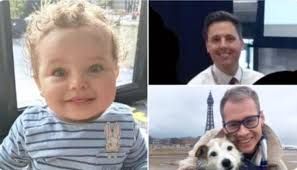
A 13-month-old baby is dead.
His name was Preston Davey.
And before anyone reaches for the comfortable explanation, the random monster, the undetectable evil, the thing nobody could have seen coming, stop.
Because that’s not what this is.
Jamie Varley was approved to adopt him.
Vetted. Cleared. Signed off by the system that exists specifically to prevent this.
This Didn’t Come Out of Nowhere
Preston didn’t go from safe to dead overnight.
The court heard he sustained around 40 traumatic injuries during the four months he spent in their care. Thirty of them were external bruises. There was a fractured arm. A perforated bowel. Bruising on his thighs consistent, medical experts said, with being slapped. Bruising on his forehead consistent with someone gripping his head.
He was taken to hospital multiple times.
And he was sent back.
Every single time.
There’s a video presented to the jury of Preston, nine months old and unsupported, sliding around in a bath for fourteen minutes. Varley filmed it. He never intervened. Never spoke. Just recorded.
That’s not a loss of control.
That’s not stress.
That’s not a bad day.
That’s detachment. And detachment like that doesn’t appear overnight either.
What Systems Measure and What They Miss
The prosecution described Varley and his partner as appearing to be in a “seemingly stable and loving relationship.”
Stable.
That word does a lot of work in these cases.
Because what vetting assesses is presentation. Compliance. Performance in the context of being observed.
What it doesn’t assess is what happens when the door closes. When supervision drops away. When a child becomes entirely dependent and entirely powerless and there is no one watching anymore.
Escalation doesn’t happen in assessment rooms.
It happens after approval.
The Part Nobody Wants to Say
There were two adults in that house.
One is accused of direct harm. The other is accused of allowing the death of a child.
People like to treat those as fundamentally different things.
They’re not.
If the warning signs were visible, and with 40 injuries, they were, then someone in that house knew enough to know something was wrong.
Silence in that context isn’t neutrality.
It’s participation.
The System Didn’t Fail Once
It failed repeatedly.
Injuries were explained away. Hospital visits were logged and filed. Concerns were noted and rationalised. Each incident, viewed in isolation, didn’t quite meet the threshold for action.
But that’s exactly the problem.
Systems are built to respond to incidents. They wait for something definitive. Something provable. Something that crosses a legal line clearly enough to justify intervention.
Harm doesn’t work that way.
Harm builds. It escalates. It becomes normalised inside the environment it’s happening in, until one day it crosses a line that can’t be undone.
By the time the system acts, it’s not prevention anymore.
It’s aftermath.
So What Do We Do With This?
Stop treating it as an aberration.
This case is visible because it ended in a courtroom. Most don’t. Most stay in the gap between risk being present and action being taken, a gap where children remain in place while systems wait for certainty that always arrives too late.
There are children in that gap right now.
Not headline-worthy yet. Not “bad enough.” But building.
Because escalation doesn’t wait for the system to catch up.
He Was Approved.
That’s the line that should stay with you.
Not the charges. Not the court proceedings. Not even the verdict when it comes.
He was approved.
And Preston Davey is still dead.
Jamie Varley and John McGowan-Fazakerley deny all charges. The trial is ongoing at Preston Crown Court. This article is based on prosecution opening statements and does not constitute findings of fact.

 The Grooming Files
Leave a comment