
©️ Sophie Lewis
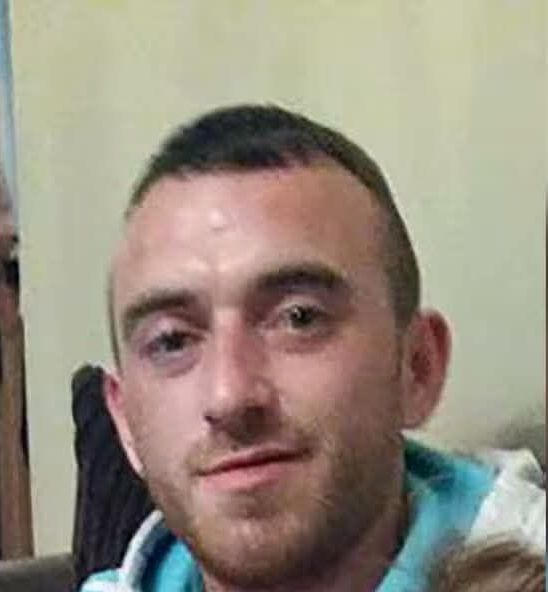
On 17 April 2026, Dylan Magee was sentenced to 13 years for the manslaughter of Matthew Healy. This is not a piece about that sentence. It’s about everything that made it necessary.
On the morning of 22 January 2023, an 88-year-old man was punched to death in his hospital bed while he slept.
He wasn’t targeted. He wasn’t involved in anything. He was a retired farmer from County Cork whose wife had died twenty days earlier. He had fallen at home the week of her funeral and been admitted to Mercy University Hospital. He was due to go home.
His name was Matthew Healy. And he died because a system that knew it had a crisis on its hands decided that what it had in place was enough.
It wasn’t. And three years on, no one has been publicly required to account for that decision.
I want to be precise about what happened, because precision matters here
Dylan Magee was not a patient who deteriorated without warning. He was not someone who slipped through unnoticed.
He was noticed. Repeatedly.
He had been urgently referred by his GP with suspected delirium. He arrived at Mercy University Hospital already hallucinating, seeing dead people, hearing voices. He had claimed to have taken 120 benzodiazepine tablets in the week before admission. Hospital toxicology confirmed cannabis and morphine in his system alongside the benzodiazepines. He was assigned a special care assistant from the point of admission, the measure reserved for patients considered too high-risk to be left unmonitored.
The hospital looked at Dylan Magee and saw the risk. I want to be clear about that, because the failure here is not one of ignorance.
The failure is what they did and didn’t do with what they saw.
The moment that defines this case
At some point during the night of 21 January 2023, another patient in that ward became so frightened by Magee’s behaviour, he was walking around the room, talking to himself, laughing, that he asked to be moved.
He was told there was no other bed available.
That single exchange is, for me, the defining moment of this case. Not because of what it tells us about Magee. Because of what it tells us about the system’s capacity to respond to its own risk assessments.
A civilian, not a clinician, not a safeguarding professional, just a person lying in a hospital bed, looked at Dylan Magee and felt unsafe. He asked to be protected. The system’s answer was that it couldn’t accommodate that request.
We don’t know from the court record why no alternative placement was found, whether it was ward capacity, resource constraints, a decision made on clinical grounds, or something else entirely. That question was not answered in court. And the fact that it wasn’t answered, that no formal review has required it to be answered, is itself part of the failure I’m describing.
What we do know is this: a live warning was raised by a patient in real time, and nothing changed. Matthew Healy remained in that room. So did Dylan Magee.
Matthew Healy had no idea what was coming. His daughter later said she believed he had spent the night awake and terrified, too polite to say anything, too trusting of the institution to imagine it had already run out of answers.
That trust cost him his life.
What withdrawal delirium actually means
I think it’s worth pausing on the clinical picture, because the phrase “diminished responsibility” tends to flatten something the court record describes in far more alarming terms.
Both the prosecution and defence psychiatrists agreed that by the time of the attack, Magee was so severely impaired that he might have been entitled to a full verdict of not guilty by reason of insanity. Not diminished responsibility, insanity. The jury chose the lesser verdict, but the clinical threshold being described was near-total loss of contact with reality.
Defence psychiatrist Dr Stephen Monks was explicit: the delirium had evolved into withdrawal delirium, a condition he described as life-threatening. Crucially, both psychiatrists confirmed that Magee had been in hospital for 65 hours before the attack, and that by that point intoxication was no longer the proximate cause. The delirium had become its own autonomous medical crisis.
One psychiatrist described the sedation given to Magee in those terms: like throwing a glass of water on a fire.
So the hospital knew he was delirious. They assigned a care assistant. They administered sedation that proved clinically insufficient. They placed him in a general ward with elderly patients. And when another patient raised an alarm, no alternative was found.
That is not a safety protocol. That is the appearance of one.
The failure wasn’t a moment. It was a chain.
This is where my criminological brain needs to name what I’m seeing, because it matters beyond this case.
What happened to Matthew Healy is the product of a documented failure chain, not a single catastrophic decision. And failure chains of this type tend to follow a recognisable pattern: risk is identified, minimum intervention is applied, that intervention proves inadequate, and by the time its inadequacy becomes visible, someone has already been hurt.
In this case the chain looks like this.
A GP recognises acute delirium and refers urgently. The hospital recognises the severity enough to assign a special care assistant. Another patient recognises danger and requests to be moved, and no alternative is found. The sedation doesn’t hold. The care assistant’s back is turned at 5:15am. And Dylan Magee crosses a ward and beats an 88-year-old man to death with his fists.
Every intervention along that chain was real. None of them were proportionate to the actual level of risk. And at the point where a fellow patient raised a live alarm and couldn’t be moved, the system had already exhausted its visible options.
What I want to know, what any serious review should be asking, is why. Why was no alternative found? What was the decision-making process? Who signed off on that placement? What risk assessment, if any, was documented? And has anything changed?
Those questions have not been publicly asked. They certainly haven’t been answered.
On the question of responsibility
The Healy family’s anger is completely understandable. Claire Healy’s victim impact statement is one of the most devastating pieces of testimony I have encountered, and she is right that her family are serving a sentence of their own that will never be reduced.
Where I part ways with the framing that Magee bears sole responsibility is on the clinical evidence. By the time he attacked Matthew Healy, he was 65 hours into a withdrawal delirium that both psychiatrists described as approaching the threshold of insanity. That is not mitigation of what he did. It is a description of what the hospital was managing, or failing to manage, when they placed him in that room.
The criminal law has now answered the question of Magee’s culpability. Thirteen years, backdated to January 2023. That process is complete.
But criminal law is not designed to answer the question of institutional responsibility. It cannot compel a hospital to explain a placement decision. It cannot require a health service to demonstrate what has changed. It cannot give Matthew Healy’s family the accountability they deserve from the people who decided, that night, that what was in place was sufficient.
Those questions sit outside the courtroom. And so far, no one has been asking them with the force they deserve.
This is not an isolated pattern
I write about the architecture of institutional failure. It’s what The Grooming Files exists to document, the ways systems see danger coming, apply the minimum required response, and then, when that response proves catastrophic, point to the procedure they followed rather than the outcome they produced.
This is not a grooming case. But the architecture is the same.
Risk is identified. A procedural response is deployed, an assigned care assistant, a sedation protocol, a referral logged. The gap between what is done and what is actually needed gets filled with process. And when that gap becomes a body, the institution retreats behind the process it followed.
Matthew Healy died in a gap like that. A gap between what was known and what was done about it.
Judge Lankford named it herself, on the record, in open court. She told the jury both men had been let down by the system. At sentencing she went further, describing Magee’s placement as, at the very least, unwise.
A judge has called it unwise. Both psychiatrists described the clinical response as insufficient. A fellow patient raised a live alarm the same night.
The institution that made those decisions has not been publicly required to answer for them.
That needs to change.
Matthew Healy was 88 years old. He was kind. He was humble. He had just lost his wife. He deserved to go home.
Naming institutional failure is not an attack on the individuals who work within broken systems. It is the only way to make those systems safer. This piece is written in Matthew Healy’s memory, and in that belief.
Sources: RTÉ News, Irish Examiner, Irish Times, Echo Live, The Journal, Central Criminal Court proceedings, Cork, December 2025 and April 2026.

 The Grooming Files
Leave a comment