
©️ By Sophie Lewis | The Grooming Files | @sophielewiseditorial
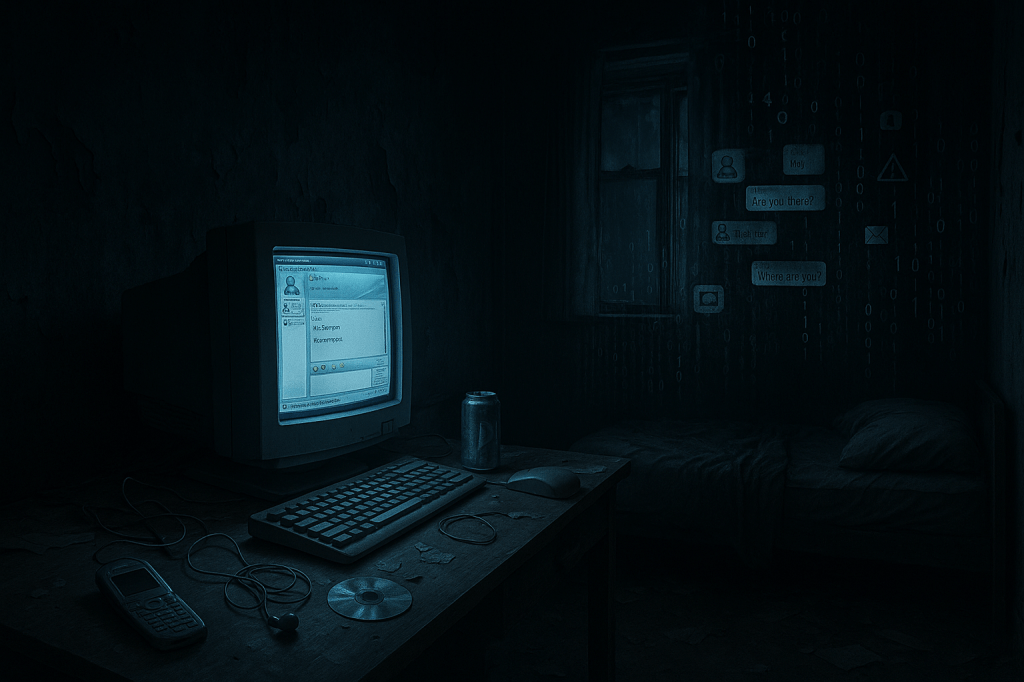
We were the first kids online. Dial-up tones. MSN Messenger. Webcams balanced on bulky monitors. No rules. No warnings. No one watching.
And the predators? They found us before our parents even knew what a USB was.
It started in the chatrooms. Kids Chat. MSN. Yahoo.
We’d log in at 9, say we were 14, and within minutes we were being asked:
“What you wearing?”
“You’re cute.”
“Show me.”
They showed themselves too. Full-grown men.. not 18, not 21, men in their 30s, 40s, 60s. They told us we were special. Mature. Beautiful. And we believed them, because nobody told us not to.
It Became Normal
It didn’t feel like grooming. It felt like attention. Excitement. Thrill. Fear. Shame. All tangled together in a way that still knots up in my chest to this day.
We started meeting them. Men with cars. Men with drinks. We lied about our ages, because that’s what girls did. We said we were 16 when we were 13.
But the truth? We looked 10. And they knew it.
We thought we loved it. That’s what they made us believe. That wasn’t informed consent, that was childhood confusion weaponised.
It became so normal it was daily. The damage was done before we even knew we were bleeding.
Ben Could’ve Killed Me
His name was “Ben.”
He was much older, Pakistani or Indian, I don’t know. We’d seen him once, walking home. He offered a lift. There were a few of us, so we got in. Young. Naive. Stupid. But kids.
The next time, I went alone.
He picked me up. Drove me to some secluded spot.. dark, empty, silent. My gut screamed. Everything in me said run. But I was trapped in his car.
He leaned in. Tried to kiss me. Grabbed at me. Pressured me. His hands. His breath. His force.
I froze. So I lied.
Pretended my sister was calling. Faked a conversation. Loudly said where I was, just in case. He hesitated. Maybe it scared him. Maybe it didn’t. But he drove me home.
The moment we hit my estate, I opened that door before the car even stopped and ran like hell.
Because I truly believed, if I hadn’t he’d have raped me. Or worse.
20 Men. Two Girls. No Way Out.
J said she knew them.
“They’re alright,” she said. “It’s fine.”
They were Nigerian. They picked us up, two teenage girls.. and took us to a house.
When we walked in?
More than 20 men. All older. All staring.
Something was wrong. The air was heavy. We were offered drinks. I told J not to take it. She did anyway.
Then we were on the move again, to another house, just the two original men now. We followed, confused. Upstairs. Into a bedroom.
It became clear, fast.
This wasn’t a hangout. This was a setup.
I grabbed J’s arm and said, “We’re going.”
We ran. Pushed past the men. Jumped over them on the stairs. Flew out the door and didn’t stop.
We called two older guys we knew, the only people we could think of.
They picked us up. Got us out of there.
It was over. But it never really was.
Because we were just kids. And it had become normal to be in danger.
They Said We Were Naughty Girls
I once tried to speak out. I’d had enough. I cracked. I told someone. And they didn’t believe me. Worse, they blamed me.
I was unstable. Dramatic.
“You loved the attention.”
“It’s your fault.”
“You were asking for it.”
Even now, when I talk to girls I grew up with, they ask:
“Was it really grooming?”
“We were naughty, weren’t we?”
“Did that really happen to us?”
Yes. Yes, it did.
That is the sound of an entire generation gaslit by silence.
We were groomed online and offline, while every adult in the system looked away.
What the System Never Saw — Because It Wasn’t Looking
There were no safeguarding policies for what we lived through. No assemblies warning us about “online predators.” No teachers trained in grooming recognition. No systems prepared for what the internet was unleashing.
We were the first generation to be groomed through a screen. And the institutions that were meant to protect us? They were still warning us about strangers with sweets in vans.
While we were being exploited by men in our inboxes, schools were still showing us cartoon leaflets about “saying no to drugs.” Police didn’t know what screenshots were. Social workers weren’t trained in digital abuse. And the law? It barely existed.
The internet was a playground, but predators were the only ones who read the rules.
The Internet Grew — But Protection Didn’t
By the time adults caught up, the damage was done. We weren’t seen as victims, we were labelled problems.
Disruptive. Promiscuous. Attention-seeking.
Our trauma was punished. Not supported. Not believed. Not understood.
They didn’t ask why we were spiralling. They gave us detentions, suspensions, isolation rooms. They moved us from school to school. They called our parents in. But they never called out the men messaging us at midnight.
We Were Never Asked the Right Questions
Nobody said:
“Are you okay?”
“Do you feel safe online?”
“Has anyone ever made you uncomfortable in a chatroom?”
We were never taught that being manipulated by a 35-year-old man wasn’t our fault. Instead, we were told to be careful, like we were the problem.
And we internalised that.
For years, we thought we were “naughty.” We laughed it off. We carried the shame. We blamed ourselves and each other.
But we weren’t being difficult. We were being groomed. And nobody. Ever. Asked.
The Legacy We Still Carry
It didn’t end when the messages stopped. Or when the house door shut. Or when the man drove away.
It stayed with us.
In our nervous systems. In our relationships. In our sense of safety. In the way we second-guess ourselves, even now.
We survived the grooming. But nobody prepared us for the aftermath.
We Grew Up — But the Damage Grew With Us
The world taught us that what happened to us wasn’t that serious. So we learned to swallow it.
We carried trauma into our teens. Into sex. Into adulthood. Into breakdowns and addiction. Into trust issues and triggered silences. Into “why can’t I just get over it?”
And still, it’s rare anyone names it for what it was.
Because we didn’t get groomed today, with safeguarding policies and public outrage. We got groomed back then, in the wild west of the internet, when people thought it was just “girls being flirty.”
No one saw us as victims. So we didn’t know we were.
Even Now, We Doubt Ourselves
That’s the legacy. Not just trauma, but doubt.
We still hear the voices in our heads:
“Was it really that bad?”
“We went along with it, didn’t we?”
“We lied about our age, though…”
We repeat the lies we were fed. We laugh when we talk about it, because we don’t know what else to do. We swap horror stories like they’re throwaway memories.
But deep down? We know we weren’t wild. We were unprotected.
And that’s what hurts the most, that we’ve had to live this long wondering if we did this to ourselves.
We didn’t.
This Never Stopped — It Just Got Easier
Predators didn’t disappear when the dial-up tone died. They evolved, just like the tech did.
Now they don’t need to lurk in MSN chatrooms. They’re on Snapchat. TikTok. Discord. Instagram. Fake names. Disappearing messages. Private servers.
They don’t have to ask for your number. They can reach a 12-year-old from a stranger’s story share or a mutual follow.
They don’t have to drive around looking for vulnerable girls. They scroll for them. They search hashtags like “lonely.” They read comments under selfies.
And the difference now? It’s faster. It’s smarter. It’s constant.
And still, the system hasn’t caught up.
They Still Count on Silence
Grooming follows the same steps it always did:
Spot the vulnerability
Build trust
Create shame
Exploit silence
Count on institutions to do nothing
Because that’s what still happens today.
A child discloses abuse? They’re asked what they were wearing. How many people they’d slept with. Whether they were “mature for their age.”
The same grooming culture we lived through, is still being handled with the same doubt, denial, and delay.
The System Learns Nothing
We’ve had inquiries. We’ve had safeguarding scandals. We’ve had high-profile convictions and public horror.
And yet:
Police still dismiss “difficult” victims
Schools still prioritise reputation over protection
The CPS still drops cases citing “credibility”
Children are still moved while abusers stay put
We’re still here. Screaming the same things we tried to say 20 years ago, and still being told we’re “complicating things.”
We’re Done Being Quiet — And We’re Not Asking Anymore
We’re not confused anymore. We’re not wondering if it “counts.” We’re not searching for the right words to make it palatable.
We know what it was. It was grooming. Abuse. Neglect. Silence. And it wasn’t our fault.
You don’t get to blame children for being vulnerable. You don’t get to excuse grown men who target trauma. And you definitely don’t get to call it a “failure” when the system was built to look the other way.
This Is Our Reckoning
We’re not asking for awareness. We’re done trying to make this easy to hear. We’re not tiptoeing around reputation or waiting for permission.
We are naming names. We are connecting patterns. We are exposing the blueprint.
This is not a call for more safeguarding leaflets or carefully worded apologies.
This is a demand:
Acknowledge us. Protect the next generation. And stop pretending this wasn’t by design.
You Can’t Erase Us
We were there. We saw everything. We’re still here. And we’re louder than ever.
You didn’t break us. You didn’t erase us. You made us dangerous, because now we understand exactly what you did.
And we’re not going away.
Author’s Note:
If this feels familiar, you’re not alone. Your story matters. Even if you’ve never spoken it out loud. Especially if no one ever believed you.
It was real. It happened. And it wasn’t your fault. ❤️

 The Grooming Files
Leave a comment