
©️ By Sophie Lewis | @sophielewiseditorial
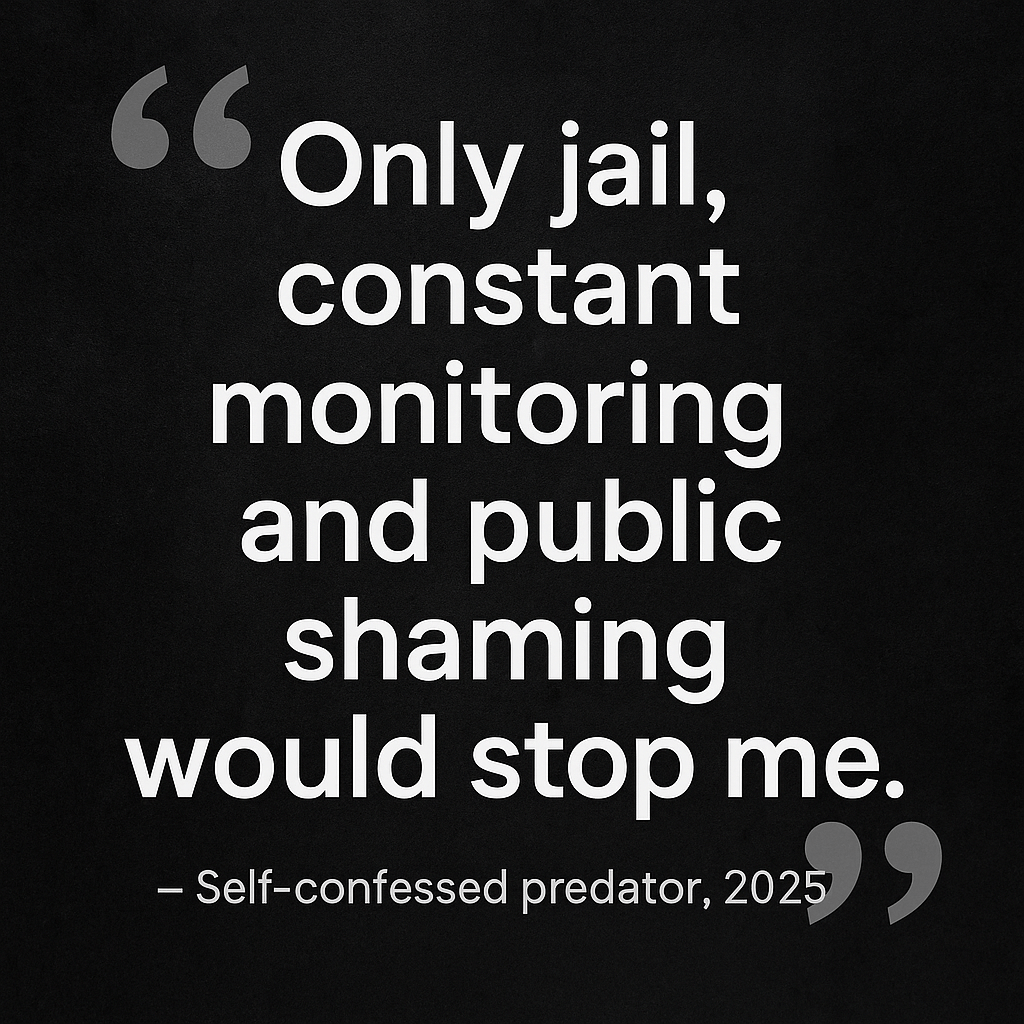
He slid into your inbox — not to deny what he did, but to admit it.
He said he was a danger to children.
He asked if you’d publish his confession.
He begged to be tracked, punished, maybe even exposed.
And then he came back the next day… asking for more.
This is the Exposure-Seeker.
A new, disturbing typology: the predator who doesn’t run from discovery — he orchestrates it.
Not because he wants justice. But because he’s spiralling.
And he wants someone else to feel it.
When Confession Isn’t Redemption — It’s Control
At first glance, the Exposure-Seeker might seem remorseful.
He admits guilt.
He offers screenshots.
He says he’s “ready to be held accountable.”
But look closer, and the pattern emerges:
- He chooses who gets to expose him
- He scripts the narrative (“Tell them I’m a monster”)
- He reappears — again and again — offering shame in exchange for attention
- He watches the reaction
- And then he tries to own it
This isn’t surrender. It’s seduction — of a different kind.
The Shame Spiral
Exposure-Seeking predators are locked in a psychological loop:
- Urge
- Offence
- Shame
- Confession
- Public Punishment
- Temporary Relief
- Repeat
Each cycle feeds the next.
Some want to be punished so badly they manufacture their own downfall.
Others confuse punishment with purification — if someone else exposes them, maybe it “cleanses” the crime.
And some eroticise their own humiliation.
This isn’t accountability.
This is a ritual.
And often, it’s compulsive.
Emerging Traits of the Exposure-Seeker:
- Sends unsolicited confessions to exposure groups or journalists
- Offers digital proof of their own offences
- Asks for tracking, control, or psychological “punishment”
- Returns after exposure — sometimes obsessively
- Uses confessional language that mimics remorse but lacks behavioural change
- Expresses simultaneous shame and arousal
This is not theoretical. Multiple predators with these behaviours have come forward in the past year — unsolicited — often citing emotional overwhelm, intrusive urges, or fetishistic need for consequence.
And yet: they remain predators.
Offending histories. Multiple victims. Deep compulsions.
Their exposure doesn’t fix them. It feeds them.
The Danger Few Are Prepared For
What do you do when a predator asks to be exposed — then asks for it again?
What happens when they treat shame as therapy?
What happens when you become part of their ritual?
Survivor-led exposers, vigilante stings, even journalists can be manipulated into the role of shamer-confessor-confidant.
And suddenly, the line between accountability and enablement gets blurred.
Worse, law enforcement often doesn’t know how to handle these men.
They’ve confessed, but may not have committed a prosecutable crime yet.
They appear “self-aware,” but still present a serious risk.
They ask for help — but weaponise it.
This Isn’t Just Masochism. It’s Moral Masochism.
Some exposure-seekers experience what’s known in forensic psychology as moral masochism — a deep-seated need to feel punished, humiliated, or shamed in order to feel control.
For these individuals, guilt is fuel.
They aren’t trying to stop.
They’re trying to feel something.
And until someone intervenes therapeutically or legally — the spiral keeps tightening.
A New Offender Category Demands a New Response
We cannot treat exposure-seeking predators as either:
- Reformed saints, or
- Pure deviants
They are neither.
They are crisis signals — warning flares of psychological implosion, high risk to others, and system failure.
They show us what happens when no intervention exists between offence and arrest.
When the only way to feel seen is through shame.
When predators turn themselves in — not to change, but to externalise control they’ve already lost internally.
The Exposure-Seeker is not asking for help.
He’s asking for containment — and hoping you’ll give it to him.

 The Grooming Files
Leave a comment