
Part 1 of “The Record They Buried — And the Woman Who Survived It”
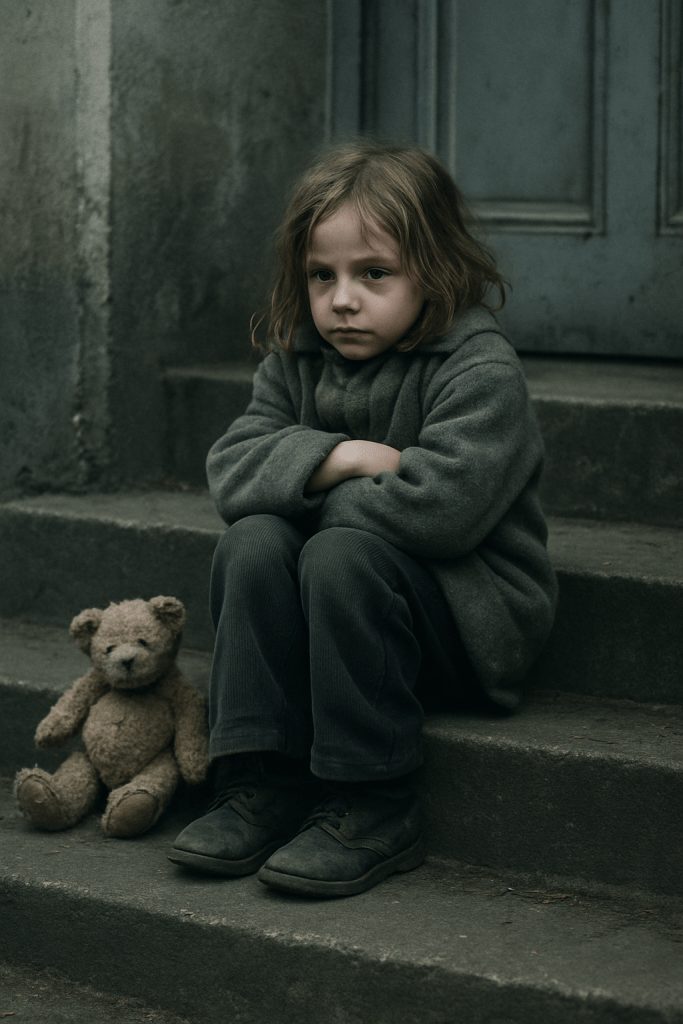
There is a silence more violent than shouting.
A neglect more painful than bruises.
A system that doesn’t break — it erases.
This is the story of Catherine O’Neill, also known as Kerry. A survivor not of one incident, but of an entire era of institutional abandonment. From the moment she entered the world, the state had its eyes on her, but never its hands where they were needed.
Her care records span over a thousand pages.
They saw. They noted. They walked away.
Now, decades later, Kerry is telling her story, not through memory alone, but through the very documents that failed to protect her. What lies in these files isn’t just her past. It’s a mirror held up to a system that still hasn’t changed.
There’s a sentence in one of the earliest records that still makes my chest tighten:
“She seemed cold.”
Not emotionally, physically.
Catherine O’Neill, also known as Kerry, was around four years old when that was written. A child. Cold, in dirty clothes, blinking constantly in a way that worried the childcare officer. But not enough, apparently, to act.
And that’s how this whole story goes.
A Childhood Spent on the Margins of Concern
Born into chaos. Moved from place to place. Repeatedly described as unkempt, only marginally looked after, not really wanted, lacking stimulation. She was placed in care and sent back. Moved again. Left with people already failing her. The files show staff seeing the cracks… but leaving her to fall through them anyway.
“She still has a habit of blinking her eyes which worries me.”
– Social Work Note, 1968
“She does not seem to have much time for the child.”
– Case Meeting Minute, 1969
“There seems to be quite a meaningful relationship between Pam and (name redacted) (who is not (name redacted) child).”
– Same note. Kerry was the one left out.
They saw her being left out. They saw her suffering.
But they didn’t see her as a child worth saving.
The Files Say It All
The reports obsess over appearances. Her dyed hair. Her clothing. Her shoes. How her mother spoke sharply. How she was “outside playing” when the worker arrived. How she seemed slightly off, but not quite bad enough to remove.
“She was outside playing in the corridor… She came in at one point, and I did definitely see her cower when her mother spoke sharply to her.”
– Visit Report, May 1968
They noticed her flinching. Her silence.
But they left her behind.
And when they did act, it was temporary or too late.
What They Never Said Out Loud
No one wrote: “We failed her.”
No one admitted: “This child is being abused and we are letting it happen.”
Instead, they danced around it while describing the evidence in plain sight.
They didn’t call it emotional neglect. Or domestic abuse. Or trauma.
They called it “unfortunate circumstances.”
They didn’t call her mother abusive.
They called her “a woman who seemed distracted.”
They didn’t call Kerry vulnerable.
They called her “cold.”
This Is What Silence Looks Like
What Kerry remembers is different.
She remembers being beaten with objects, left without food, sexually abused multiple times, sleeping in her own urine in an armchair because there was no bed. She remembers flinching for real reasons, not just because a worker thought her mum was “sharp.”
They wrote what they saw. But they didn’t act on it.
That’s what makes these records so harrowing.
This isn’t a story about ignorance.
It’s a story about institutions that saw and stayed silent.
Next:
📁 Part 2: The Paper Trail – What the Files Reveal

 The Grooming Files
Leave a comment