

© By Sophie Lewis | @sophielewiseditorial

How One Chart Validated the Human Collapse Cycle and Predicted the Next War
I didn’t pick Palantir because I believed the hype. I picked it because the chart moved like something I’d survived.
In 2023, I started watching Palantir. Not because I’d researched it. Not because someone tipped me off. But because its chart spoke to me.
I saw it. I felt it. I knew its movements. Resistance zones, breakout patterns, consolidation stretches. I didn’t know what Palantir was. But I knew the pattern was real.
And now I understand why.
Palantir Technologies isn’t just another tech firm. It’s a government-contract-backed data surveillance giant. Their clients? The CIA, NSA, military departments, predictive policing units. Their product? Software that digests mass data and forecasts threats.
It builds pre-emptive control infrastructure. For war. For policing. For profit.
The moment I learned what Palantir was, everything clicked. I hadn’t just been tracking a company. I’d been tracking a signal. And that signal aligned perfectly with the theory I’ve spent years building.
The Human Chart Cycle: Proved in Real Time
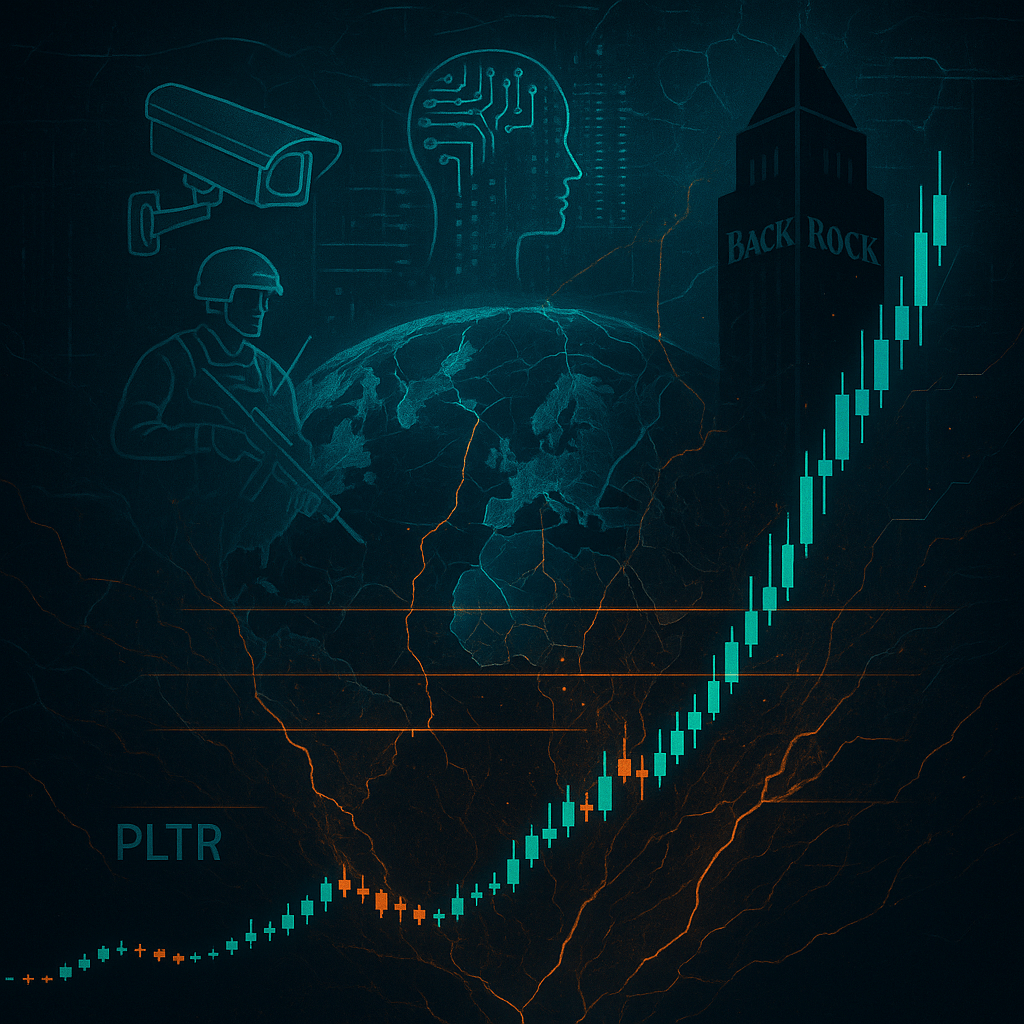
My Human Chart Cycle theory maps the behavioural patterns of markets, movements, and nervous systems. It follows a predictable, trauma-rooted flow:
Accumulation → Breakout → Resistance → Collapse → Regeneration
And Palantir’s stock chart mirrors this exactly.
- Accumulation Phase (2022 to early 2023): Price flatlines. Public awareness low. Tension building quietly.
- Breakout Phase (mid-2023): Sudden rally. AI narratives go mainstream. New investor hype floods in.
- Resistance Phase (late 2023 to early 2024): Price stalls. Volatility increases. Faith in the system starts cracking.
- Breakout Again (mid-2024 to now): Price explodes. All-time highs hit. Why? Because governments are preparing for conflict. And Palantir is built for war.
This isn’t theory. This is visible, measurable, documented.
This pattern didn’t just mirror the market — it mirrored the trauma cycles I mapped in my book Cycles We Carry. The same phases of breakdown and resistance I saw in movements and bodies were now flashing through Palantir’s chart.
What I was tracking wasn’t random. It was resonance. The body knows the system because it’s lived it. If you’ve ever been in survival, in chaos, in control-based dynamics — you know what resistance feels like. You can sense when something is about to break.
That’s what this chart became: a nervous system on the brink. And it was my confirmation that we were entering a global cycle of escalation.
I Was Watching the War Before It Started
The charts don’t lie. They show what the news hasn’t caught up to.
Palantir’s price action told me something before the headlines did:
Global escalation is not coming. It’s already here.
Because Palantir doesn’t thrive in stability. It thrives in crisis. It profits from control, conflict, and compliance. And its chart is telling us that every institution betting on it is preparing for a future shaped by those forces.
The Human Chart Cycle warned us: resistance is the final grip before collapse. Palantir’s breakout isn’t just bullish sentiment — it’s a signal of what’s next.
The question isn’t just what the price says. It’s: what is this price rise funding? And what it’s funding is control systems, war contracts, and pre-emptive surveillance. Every candle on that chart is backed by algorithms designed to monitor, predict, and manage the public. The higher the chart climbs, the more embedded these tools become in daily life.
The Architect Behind the System: Who Is Peter Thiel?
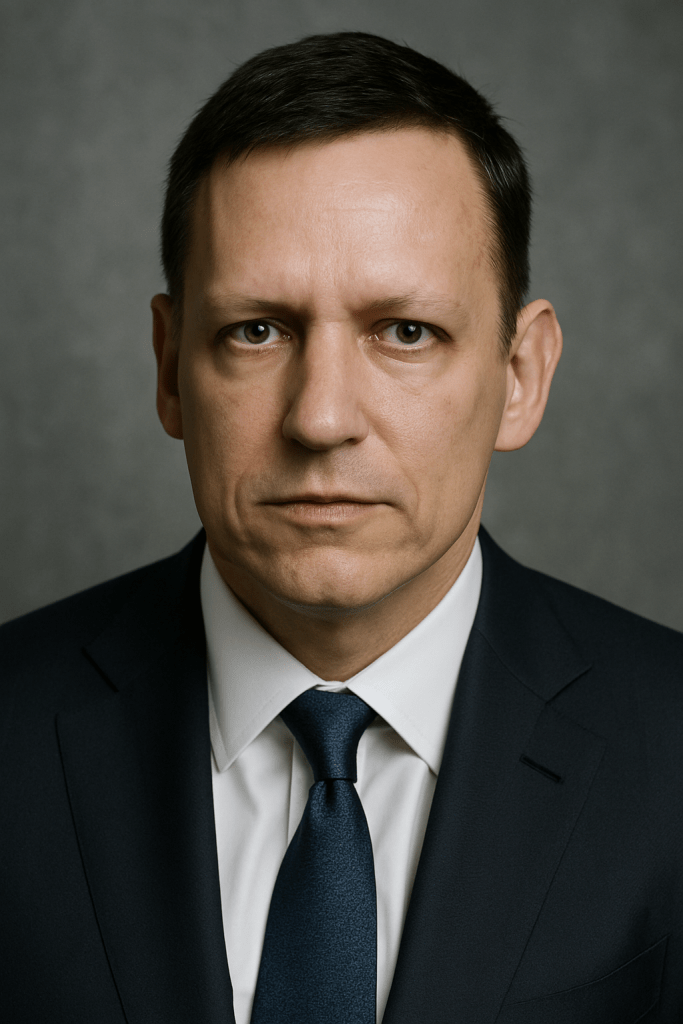
Palantir’s rise didn’t happen in a vacuum. It was engineered. And behind that engineering stands one man: Peter Thiel.
A co-founder of PayPal, early investor in Facebook, and one of the most quietly powerful figures in tech, Thiel is no ordinary billionaire. He’s the architect of predictive control.
- He co-founded Palantir in the post-9/11 surveillance wave.
- He backed Trump. Funded hard-right political candidates.
- He’s obsessed with AI, border control, authoritarian infrastructure, and even longevity tech.
- He’s publicly questioned whether democracy and capitalism can coexist.
Thiel isn’t just making money. He’s shaping the architecture of modern obedience. Palantir is his flagship: a company that doesn’t just read data — it profiles, predicts, and pre-polices.
This is the machinery of forgetting. This is what I wrote about in The Great Forgetting. Because the system doesn’t just want to control you. It wants to erase the parts of you that would resist.
Palantir is a forgetting engine. Thiel is its prophet. And the public is sleepwalking straight into the surveillance state with AI at the wheel.
BlackRock: The Asset Manager of Collapse
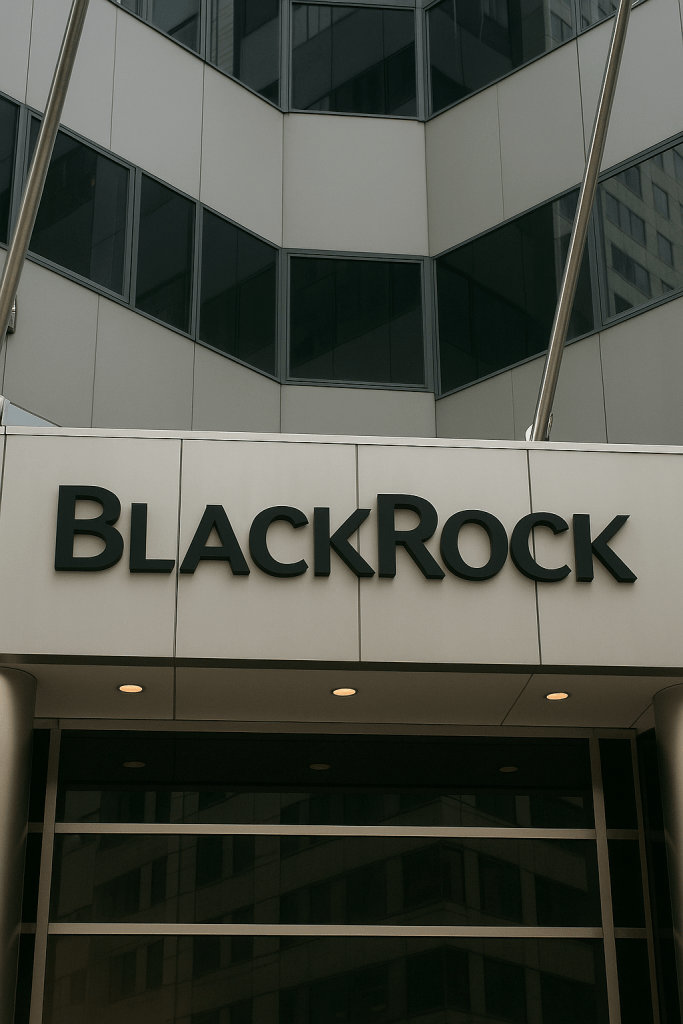
But Peter Thiel didn’t do this alone. Palantir has heavyweight allies.
Enter BlackRock — the largest asset manager on Earth.
As of 2025, BlackRock owns over 188 million shares of Palantir, nearly 8.4% of the company. This isn’t a casual investment. It’s strategic. Deliberate. And it places Palantir at the centre of a much bigger agenda.
BlackRock recently launched a defence-industrials ETF (IDEF) — putting Palantir alongside Lockheed Martin, Northrop Grumman, and other war-market titans. The rationale? “Geopolitical fragmentation and AI warfare demand a new national security economy.”
And BlackRock’s internal risk engine, Aladdin, doesn’t just track the market — it models the world. With over $21 trillion under management, it predicts climate threats, financial crashes, social instability. And now, its forecasts include the very tools (like Palantir) that will respond to those crises.
This is a closed loop:
- BlackRock predicts collapse.
- Palantir builds control systems to manage collapse.
- BlackRock funds Palantir.
It’s not just investment. It’s engineering the outcome. This is how modern power works: silently, financially, algorithmically. And no one votes for it. No one even sees it — unless they’re tracking the charts.
This Wasn’t Just Intuition. It Was Pattern Recognition.
When I started tracking Palantir, I didn’t know what it did. But my body knew the rhythm. This wasn’t spiritual. It was structural.
The market moves like a nervous system. And I’ve lived in survival long enough to feel the shift before it lands. Palantir validated everything I’ve built:
- That cycles repeat.
- That collapse is forecastable.
- That war doesn’t need to be announced to be active.
And that if you pay attention to the right chart, you can see what’s coming.
We’re entering the final stages of resistance. The control systems are rallying. And if Palantir’s ATH tells us anything — it’s that collapse is closer than they’ll ever admit.
Watch the charts. Read the system. Because it’s already moving.
This article is the system layer. The data. The infrastructure. But if you want to understand what this moment feels like — what it’s doing to our nervous systems, our connections, our humanity — read it alongside:
The Great Forgetting — And Why the World Might Not Survive It.
Together, these two pieces tell the full story:
- The machinery of collapse.
- And the soul that’s slipping with it.
This is not just a crisis of power. It’s a crisis of memory. And if we forget who we are long enough, we won’t remember how to survive what comes next.

 The Grooming Files
Leave a comment