

Public interest journalism. All individuals are presumed innocent unless proven otherwise. This article is based on direct testimony, recorded material, and verified public statements.
When does telling the truth become a crime?
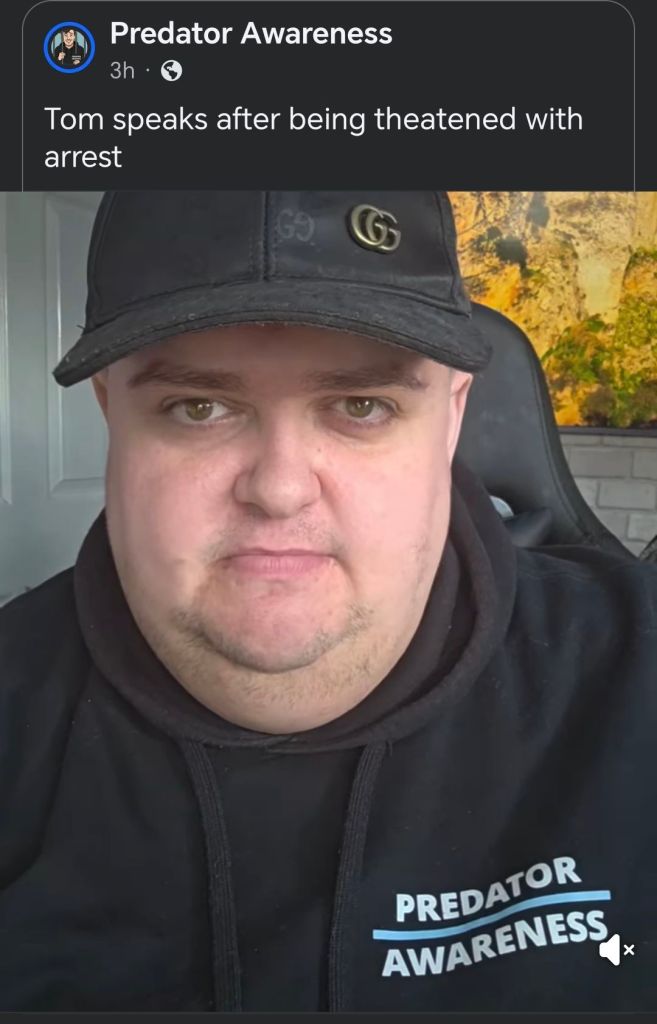
That’s the question being asked this week after West Midlands Police allegedly threatened Predator Awareness founder Tom Blewitt with arrest over a factual online post.
Tom had shared evidence-based information, content he stands behind and can prove. But instead of engagement or challenge, he received a phone call that has since sent ripples through the advocacy community.
“Take it down — or face arrest”
During the call, which Tom states was recorded, an officer reportedly told him:
“If you don’t remove the post, we will arrest you.”
No formal charge. No warrant. No demonstrated breach of law, just an ultimatum. Remove the post, or risk losing your liberty.
Tom is now seeking legal advice and standing firm.
What was in the post?
The post in question contained material Tom believed to be both truthful and in the public interest.
It did not include threats, abuse, or targeted harassment, the elements typically required to meet the legal threshold for a “malicious communications” offence.
It was, simply, a piece of advocacy, the kind of speech protected by both UK law and basic human rights standards.
The wider danger
Threatening campaigners or journalists with arrest for publishing verified information is not just a legal overstep. It’s an attack on public interest speech itself.
When officers issue ultimatums like this without court oversight or formal charge, they risk eroding both free expression and public trust in policing.
Malicious communications laws were never intended to shield uncomfortable truths from public view.
Statement from Predator Awareness
In a statement, Predator Awareness said:
“The post in question contained factual information supported by evidence. We ask, since when has telling the truth become a criminal offence in this country?”
The team now say they will not be silenced and that legal guidance is ongoing.
Why this matters
Today it’s Tom. Tomorrow it could be any campaigner, survivor, or independent journalist.
These kinds of tactics, whether deliberate or misguided, have a chilling effect. They make people think twice before speaking out. They sow fear where there should be debate.
And in a democracy, that’s dangerous ground.
We will be following this situation closely. Police must be held to standards of proportionality, fairness, and respect for public interest speech.
Because when truth starts being treated as a crime, we all lose.
If you have faced similar tactics, or wish to share your story confidentially, contact us at: sophie.editorial@outlook.com.

 The Grooming Files
Leave a comment