
By Sophie Lewis | The Grooming Files | @sophielewiseditorial
PART 1: The New Normal — Sexualising Children in Plain Sight
“She’s just dancing.”
“They’re just clothes.”
“You’re overreacting.”
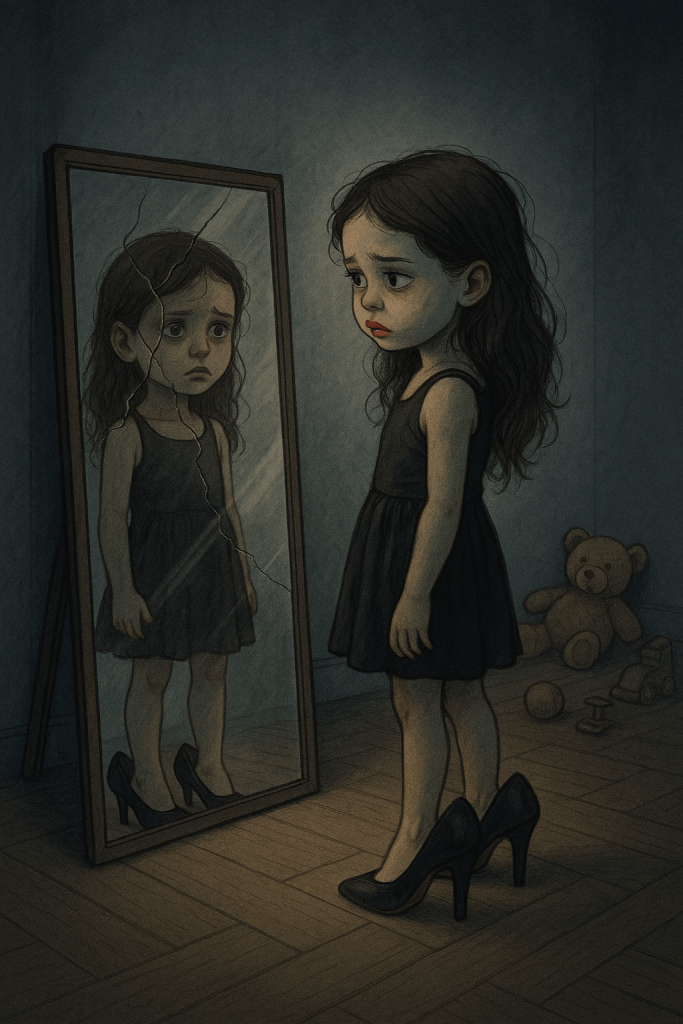
We’ve heard it all before. But let’s be clear: if you need to defend why a child looks or acts like an adult, something’s already wrong.
It’s 2025 — and the sexualisation of children isn’t hidden anymore. It’s packaged, promoted, and paraded in plain sight. Scroll TikTok for 30 seconds. Walk down the kids’ clothing aisle. Turn on a “family” Netflix show. It’s everywhere — and it’s deliberate.
We’ve normalised what once would’ve triggered outrage. Mini crop tops with slogans like “Heartbreaker” in 5-year-old sizes. Dance challenges where preteens mimic hypersexual moves. YouTube stars under 12 being styled like reality TV influencers. And the views? Millions. Many of them from adult men. No one asks why.
This isn’t about being prudish. This is about power, grooming, and profit. Children are being moulded into adult-shaped fantasies — not by mistake, but by design. Their innocence is being sold back to us in algorithm-friendly packaging.
The Hypersexual Culture Feed
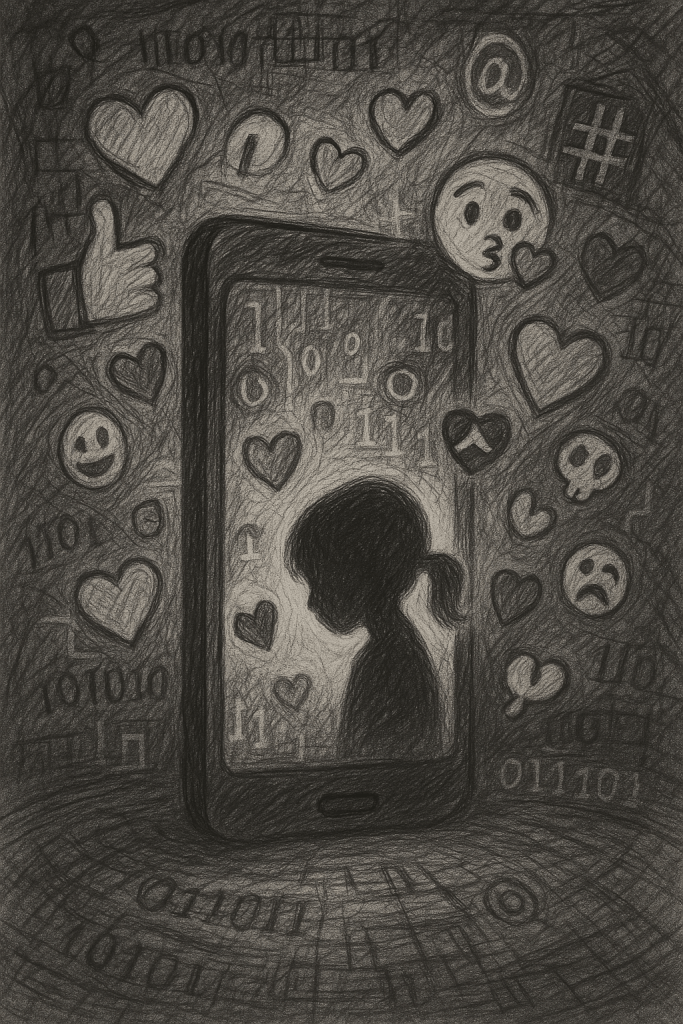
Platforms like TikTok, Instagram, YouTube — these aren’t neutral spaces. Their algorithms favour engagement. And guess what drives engagement when a child is involved? Sex appeal. If an 11-year-old in shorts and lip gloss gets more views than one in school uniform reading a book, guess which one the machine promotes?
We’ve seen young girls being praised as “baddies,” “slay queens,” “wife material” — all by adults. Comment sections are cesspits of innuendo, emojis, and thinly veiled paedophilia. And still, no age locks, no flags, no bans.
The truth is: tech doesn’t care who watches your child, as long as they’re watching.
Kids’ Fashion or Fetishwear?
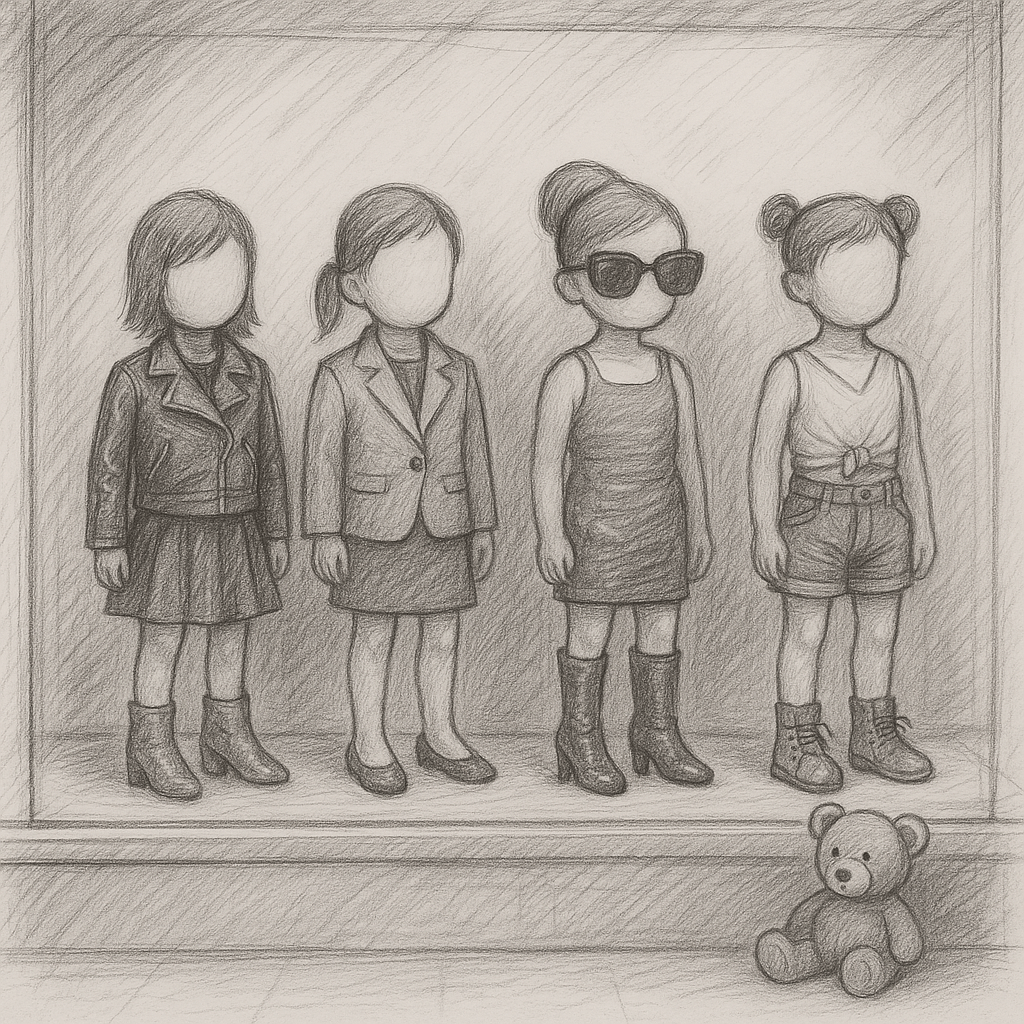
Major high street brands are complicit. Children’s clothing lines now mimic adult styles — think tiny padded bras, off-the-shoulder tops, mesh panels, hot pants. Why? Because “influencer culture” sells — and even kids aren’t spared.
Girls as young as 4 are being marketed lip gloss, fake nails, and “shimmer sticks.” Boys are told to be ‘players,’ dress like drill rappers, or act tough for validation. These are not child choices. These are adult projections.
Family Shows With Adult Themes
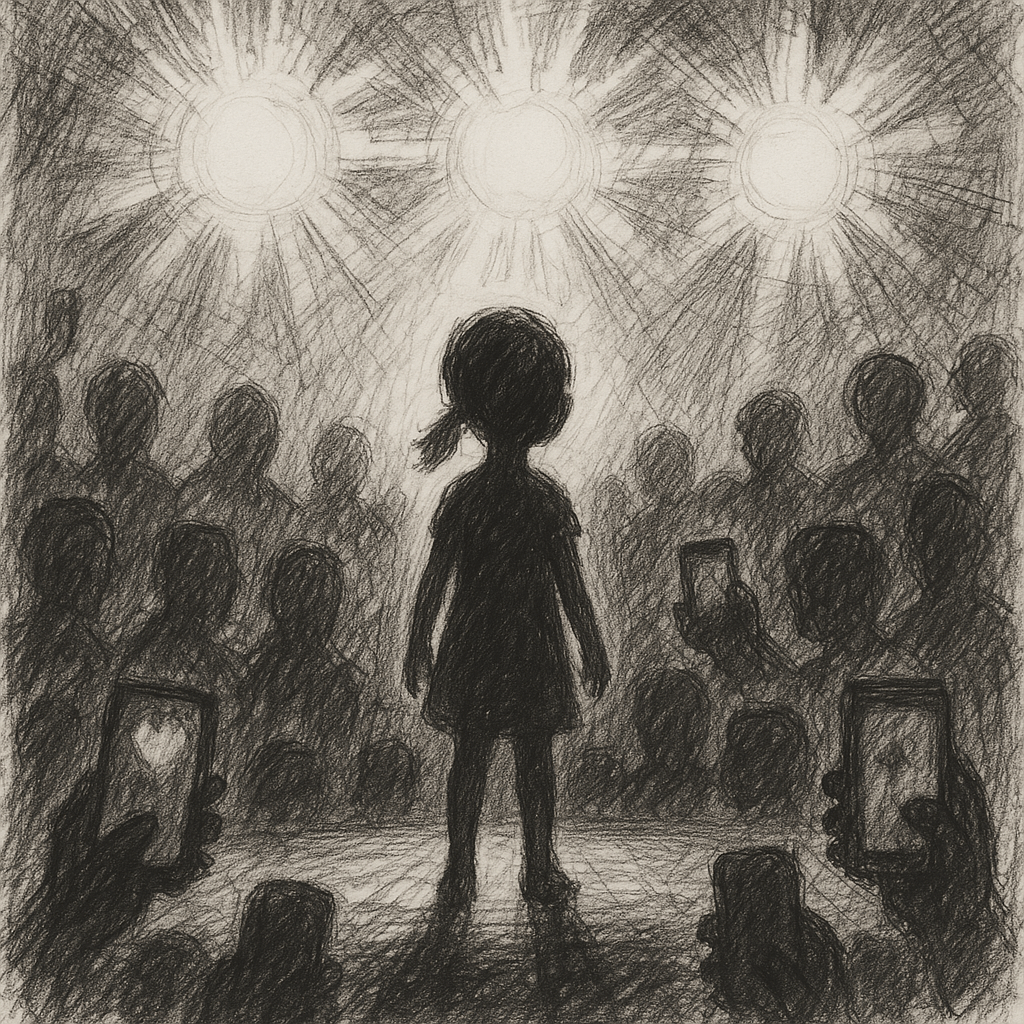
TV isn’t safe either. “Coming-of-age” now means a storyline about sexual discovery — sometimes involving 13-year-olds. We’re not talking education. We’re talking scripted, fetishised, slow-burn romance arcs between children — acted out, edited, and streamed for millions.
The line between awareness and arousal has been crossed — and nobody’s drawing it back.
So Why Aren’t We Outraged?
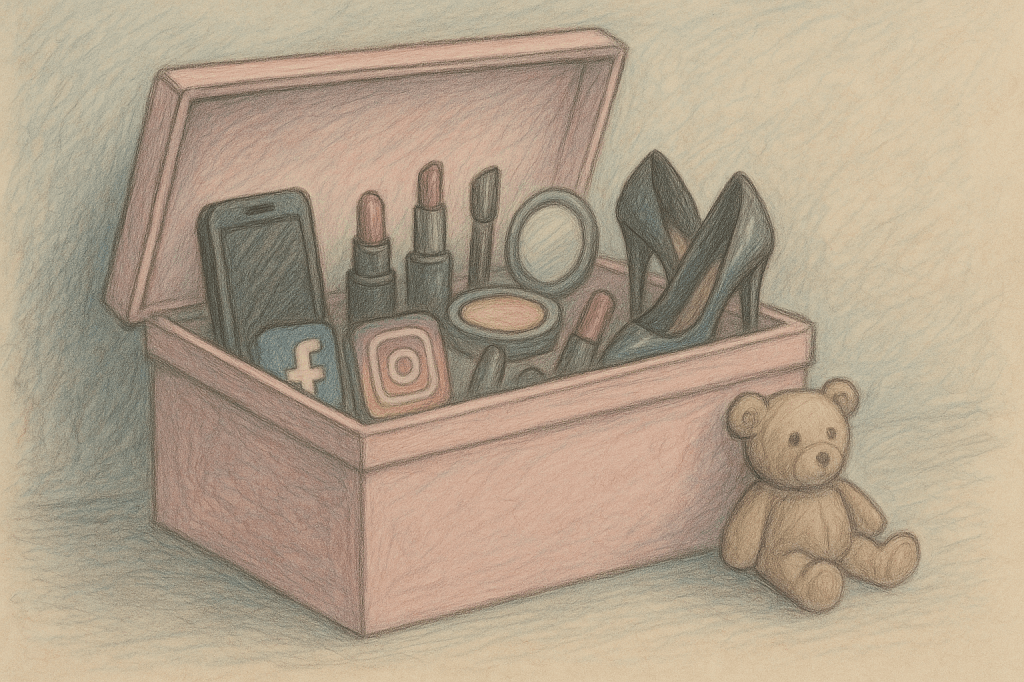
Because this has been a slow drip. A grooming of society itself. What was once shocking is now shrugged off. We’ve been told to “be modern,” “don’t judge,” “let kids express themselves.” But expression isn’t free when it’s market-shaped and algorithm-approved.
This isn’t kids being kids. It’s adults crafting kids into what they want them to be. For attention. For content. For clicks. For control.
This Is Just the Beginning
In Part 2, we’ll go deeper into the pornified landscape — how children are not only watching porn but being shaped by it, whether they realise it or not. And how porn itself is feeding back into how kids dress, act, and view their own value.
But for now, sit with this: How did we get here?
And who benefits from a world where children are no longer allowed to be children?

 The Grooming Files
Leave a comment