
© By Sophie Lewis | The Grooming Files | @sophielewiseditorial
A survivor-led educational breakdown of the biggest myth fuelling child sexual abuse silence.
We Like to Think We’d See It
Ask the average person what a child abuser looks like, and you’ll likely get a description straight out of a crime drama:
A man. Strange. Dirty. Hunched. Possibly lurking near a school or a park. Definitely “not one of us.”
That image, the obvious predator is so deeply embedded in the public psyche that it’s become the default warning sign.
But that image is not just wrong.
It’s dangerous.
Because it lets the real ones hide in plain sight.
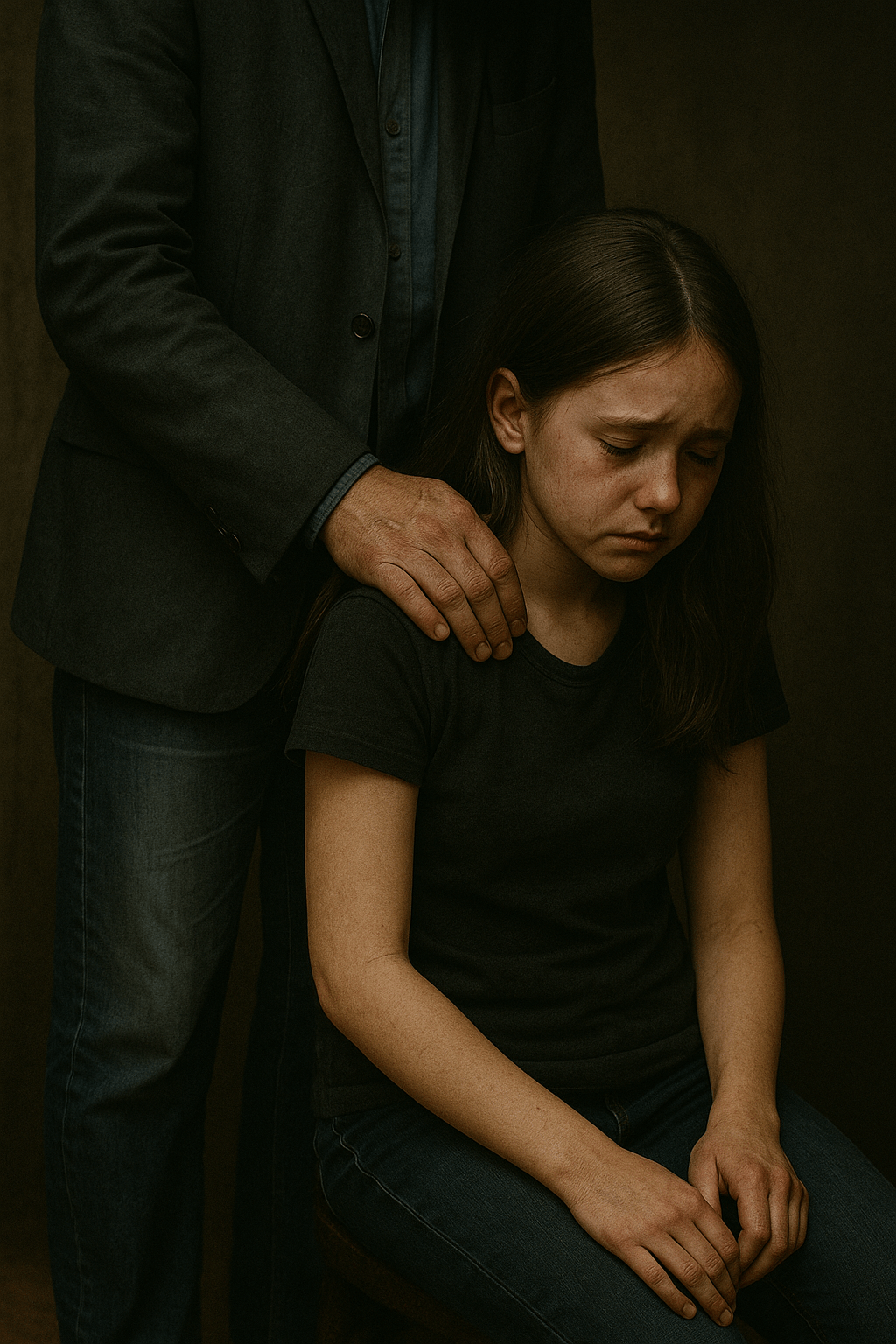
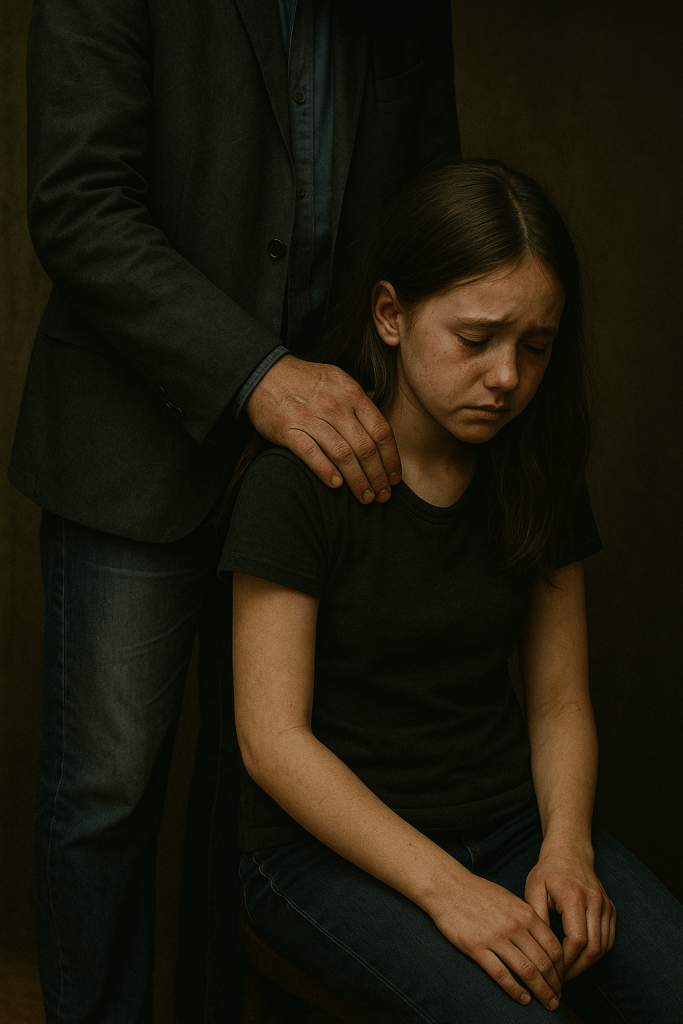
Most Abuse Happens Within the Circle of Trust
This is the fact that society still flinches from:
Most children who are sexually abused are not harmed by strangers. They’re harmed by someone they know.
In fact, according to NSPCC and other safeguarding bodies, around 85–90% of child sexual abuse is committed by someone the child knows and trusts.
- A biological parent.
- A stepfather.
- An older sibling.
- A teacher.
- A neighbour.
- A friend’s dad.
- A family friend everyone calls “uncle.”
These are not fringe figures. They’re central. And often, they’re loved.
This is what makes the abuse more damaging. And far harder to speak about.
The “Monster Myth” Lets Them Blend In
When we only teach children to fear strangers, we give abusers a gift:
Camouflage.
If a child sees their abuser as kind, funny, respected, even admired. It becomes nearly impossible for them to reconcile that with “something bad happening.”
Especially if the abuse is gradual, disguised as affection, or attached to manipulation like:
- “This is our secret.”
- “I do this because I love you.”
- “If you tell anyone, you’ll ruin everything.”
Society’s obsession with “monsters” makes us blind to these subtler but far more common realities.
Grooming Adults Before Children
One of the least understood truths about child sexual abuse is this:
Abusers don’t just groom children. They groom adults too.
They earn trust. Play the part. Offer help. Work their way into people’s good books.
This is especially common in:
- Schools
- Sports clubs
- Religious settings
- Foster and care homes
- Extended family networks
When the time comes for a child to speak up, the adults around them may already be disarmed.
“They’d never do that.”
“They’re such a lovely person.”
“They’ve always been great with kids.”
And just like that, the door closes. Not on the abuser, but on the child.
Not All Abusers Look or Act the Same
Forget the stereotypes. Abusers don’t all fit one look, personality type, or background.
Some are outgoing. Some are quiet.
Some are poor. Some are powerful.
Some have criminal records. Many do not.
Some are angry and forceful. Others are calculated and patient.
The common thread isn’t who they are, it’s what they do:
They exploit vulnerability. They cross boundaries. They manipulate silence.
And often, they rely on the fact that nobody suspects them.
Why Survivors Are So Often Disbelieved
When a child discloses abuse by someone close, someone loved, respected, or admired. They’re not just risking disbelief.
They’re risking rupture.
They might be breaking up a family. Exposing a secret. Shattering an illusion.
That’s a terrifying weight to place on the shoulders of a child.
And many decide, consciously or not to carry the pain quietly instead.
Others do speak. But because the abuser “doesn’t seem like the type,” they’re met with doubt, silence, or worse: blame.
Denial Is a Breeding Ground
The truth is hard to sit with.
But we have to:
Abuse doesn’t happen because we didn’t spot the monster. It happens because we refused to look where it was most likely to be.
Every time we picture abuse as a freak occurrence carried out by a “sick individual,” we make it harder for survivors to be believed.
And we make it easier for the next predator to blend in.
What Needs to Change
If we want to protect children, really protect them, we must rewire the narrative. That starts with:
- Educating children that abuse can come from people they know
- Teaching adults the signs of grooming, even when the person is likeable
- Believing survivors when they speak up, even if the accused doesn’t “seem the type”
- Replacing shock with vigilance — understanding that abuse isn’t rare, but hidden
This doesn’t mean turning everyone into a suspect. It means widening our lens.
Knowing that safety comes from awareness. Not denial.
There is no single face of a predator.
There is no one type of abuser.
But there is a pattern:
Silence. Shame. And the myth that it couldn’t happen here.
If we keep chasing monsters, we’ll miss the ones already sitting at the dinner table.
It’s time to see clearly. And protect bravely.
This is Part 2 of the ‘What We’re Still Not Talking About’ series.
Read the flagship article here:What We’re Still Not Talking About

 The Grooming Files
Leave a comment