
© By Sophie Lewis | The Indie Leaks | The Grooming Files | @realtalkrealtea
Truth that can’t be silenced
The Uniform of Impunity
There’s a reason people flinch when a cop car pulls up. It’s not just fear of authority — it’s fear of what that authority has become.
In Britain today, the ones wearing the badge are not always the ones upholding the law. Sometimes, they’re the ones breaking it — in the most violent, predatory, and protected ways imaginable. And worse still, they’re doing it under the nose of a system that doesn’t just look away.
It covers for them.
Over 1,100 police officers across England and Wales are under active investigation for domestic abuse or sexual violence. Let that sink in. That’s 1,100 potential abusers — rapists, manipulators, wife-beaters — still drawing salaries, still holding power, still trusted by the public. And in many cases?
Still on duty.
Behind every statistic is a woman who wasn’t believed. A child too afraid to speak. A colleague who saw the signs and said nothing. And a uniform that shielded the predator, not the public.
This isn’t a case of “a few bad apples.”
This is rot in the roots.
The Numbers They Buried
In late 2023, an FOI-backed investigation revealed that 1,131 serving officers in England and Wales were facing allegations of domestic abuse or sexual offences. That number includes active duty officers with open cases of:
- Rape
- Coercive control
- Harassment
- Grooming
- Assault
Some of these officers had multiple complaints filed against them over the course of years, yet faced little to no disciplinary action. In many cases, they remained in post — patrolling neighbourhoods, responding to domestic incidents, carrying firearms.
One senior officer admitted off record: “If we suspended every officer accused, we’d have nobody left on shift.”
Let that speak for itself.
Case Study: David Carrick — The Wake-Up They Ignored
David Carrick was a Metropolitan Police officer for two decades.
In that time, he raped or assaulted at least 12 women — possibly more. His methods were textbook: he isolated victims, weaponised his badge, locked women in small rooms, controlled their finances, and used the force’s name as a shield. Complaints were made. He was even arrested in 2021.
Still, the Met kept him in uniform.
The final straw only came after public outrage reached boiling point — long after the victims were broken, long after the red flags had stacked sky high.
Carrick wasn’t the outlier. He was the red flag the system refused to acknowledge.
A Culture of Silence, Brotherhood, and Power
Why aren’t these officers held to account? Because the system wasn’t designed to hold them to account. It was designed to protect them.
Police forces in the UK are still allowed to investigate themselves. Internal misconduct panels are often made up of fellow officers. Complaints are frequently dismissed or downgraded. And whistleblowers — those inside the system brave enough to speak — are bullied, sidelined, or forced out.
In March 2023, the Casey Review into the Metropolitan Police confirmed what survivors and campaigners had been shouting for years:
- The Met is institutionally misogynistic
- Institutionally racist
- Institutionally homophobic
The review exposed everything from officers sharing rape jokes on WhatsApp, to locker rooms defaced with swastikas and homophobic slurs. A female officer who reported sexual harassment was told she was “too emotional.” Another was sexually assaulted — and later told to “reflect on how she dresses.”
Still, no one at the top resigned.
Victims, Silenced – The Power Behind the Badge
For most victims of abuse, speaking out is hard enough.
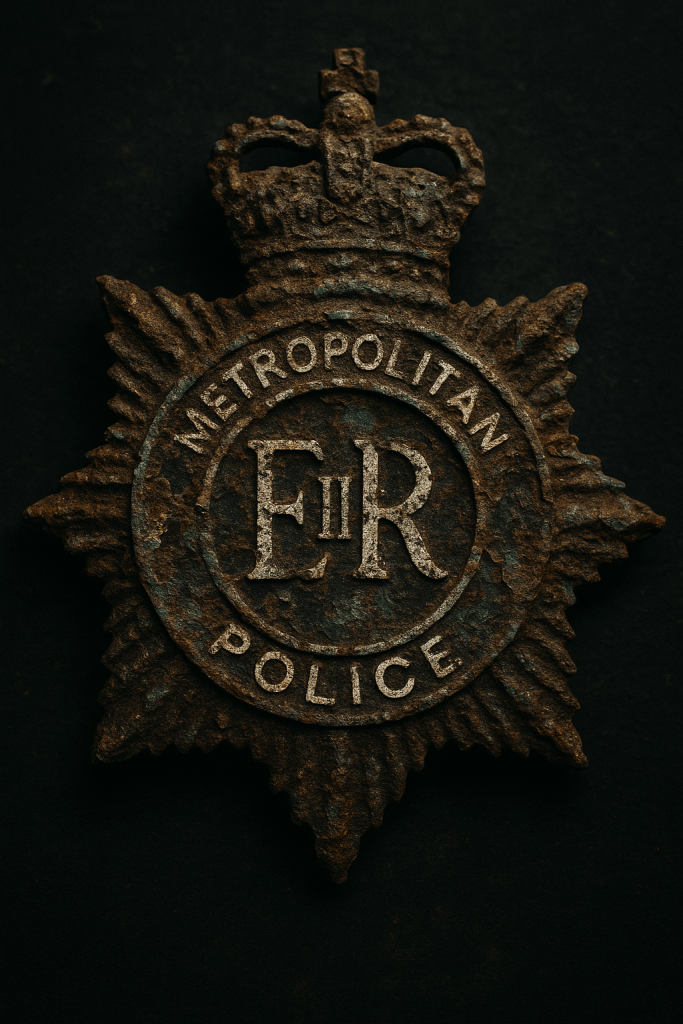
But imagine this: the person who hurt you carries a badge. Has access to your records. Knows where you live. Can knock your door with the full weight of the law behind them. And if you report it?
Their mates investigate.
This is the reality for hundreds — possibly thousands — of people in the UK whose abusers aren’t strangers or strangers in uniform. They’re officers. Police constables. Sergeants. Senior ranks. Often the very people trained to spot signs of coercion and domestic violence.
The same tactics they’re meant to stop — they’re using behind closed doors.
“He Told Me No One Would Believe Me. He Was Right.”
This is the voice of a woman whose ex-partner — a decorated officer — controlled her every move for three years. He’d monitor her calls, control her finances, and threaten her with legal retaliation if she ever left.
“He told me if I called the police, it’d be him showing up. He was right.”
When she finally found the courage to speak, her report was buried. The force declined to investigate, citing “lack of evidence.” She later learned that officers handling her case were close to her ex.
This is not rare.
A 2022 report from the Centre for Women’s Justice detailed over 150 cases of police-perpetrated abuse — and nearly all followed the same pattern: the victim speaks out, the officer denies it, and the complaint disappears into internal paperwork.
Weaponising the Badge
This isn’t just domestic abuse with a uniform. It’s something deeper — a calculated use of institutional power to control, silence, and discredit.
Examples include:
- Using PNC checks (Police National Computer) to stalk ex-partners or intimidate victims
- Threatening arrest or child removal to silence women
- Calling in favours from colleagues to block investigations
- Turning up unannounced at homes or workplaces after breakups
One officer was found to have accessed sensitive records of women he’d matched with on dating apps. Another threatened to plant drugs in his partner’s car if she left.
These aren’t rogue officers.
They’re products of a system that gives predators authority — and zero meaningful oversight.
Silenced by System and Shame

Victims of police-perpetrated abuse don’t just face institutional silence. They face public disbelief.
Because how do you accuse a police officer in a country where trust in “law and order” still runs deep?
Many survivors reported being dismissed by friends, family, and even social services. Some were re-traumatised by court processes that viewed them as bitter exes or unstable witnesses. Others gave up altogether.
“I thought reporting him would bring safety. It made things worse. He had more power after I spoke out — not less.”
Vetting? What Vetting?
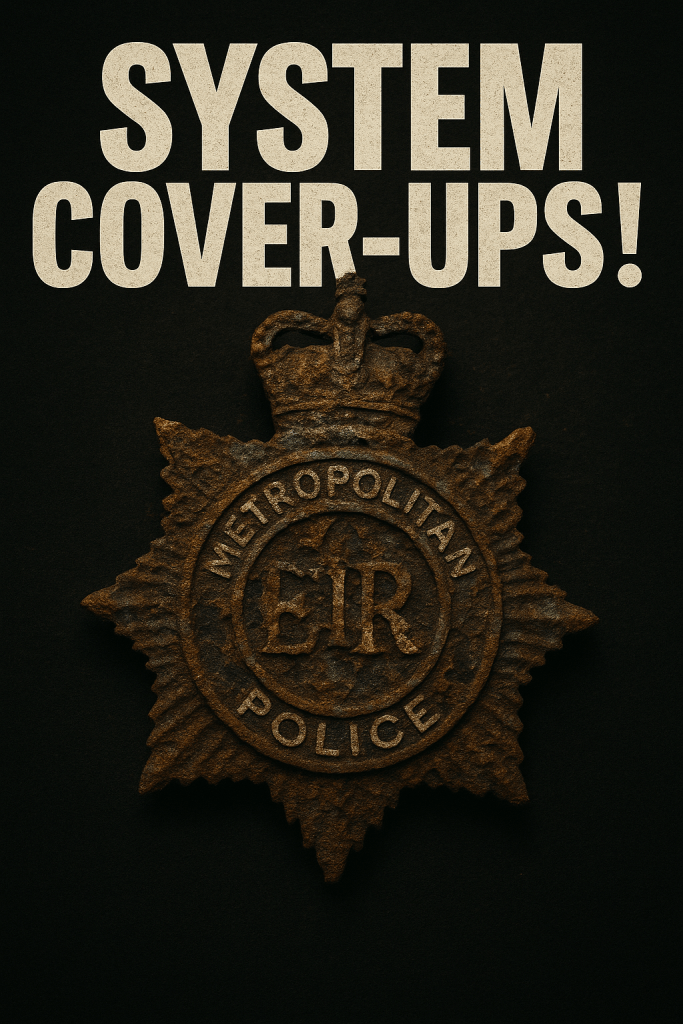
We’re told that police officers go through strict vetting. That every name, every record, every red flag is checked before they get the badge. That the system is designed to filter out the dangerous, the unstable, the predatory.
But in Britain, the vetting system isn’t filtering.
It’s enabling.
The Myth of Screening
According to the College of Policing, every officer must pass a “vetting check” that looks at criminal history, financial risk, social connections, and behaviour. But the reality?
It’s paper-deep.
The Baroness Casey Review laid it bare in 2023: officers with histories of domestic violence, sexual misconduct, and even child abuse images were still hired — and some were promoted.
In one documented case, a man was accepted into a force despite multiple restraining orders from ex-partners. Another had been investigated for harassment twice before being approved. And once inside? Complaints were “handled” internally — meaning they rarely led to dismissal.
No Central Offender Database
Shocking as it sounds: there’s no single, national database tracking officers accused of misconduct across forces.
This means a constable fired from one area for abuse can apply to another — and unless that force digs deep, they may never know. It’s what campaigners call the “blue wall shuffle” — move the problem, not remove it.
A 2023 HMICFRS report warned that hundreds of officers currently serving would not have passed vetting today. But no retrospective reviews were carried out. They were left in post.
Because firing them might make the force “look bad.”
The Police Who Police the Police
Vetting checks are often conducted by other officers inside the same force. That’s right — the people greenlighting new recruits are colleagues of the very people they’re meant to monitor.
In small or under-resourced forces, this leads to fast-tracked recruitment — where potential red flags are overlooked to hit hiring targets. After all, the Tories pledged 20,000 new officers by 2023 — speed over safety became the silent rule.
And who steps in when it all goes wrong?
The Independent Office for Police Conduct (IOPC). Except they’re not truly independent. Many of their staff are ex-police. Investigations take years. Outcomes are watered down. Officers found guilty of misconduct frequently escape criminal charges or even keep their jobs.
The Bottom Line
The vetting system is not broken.
It’s functioning exactly as expected in a culture built to protect its own.
The Complaint System That Never Meant to Work

When a police officer abuses you — sexually, physically, emotionally — your first instinct might be to report it. You gather your courage, make the call, write the statement, maybe even attend an interview. You do everything right.
Then comes the silence.
The minimising.
The slow erosion of hope.
Because when the person you’re reporting is in uniform, the complaint system doesn’t exist to protect you. It exists to protect them.
Where Do Complaints Go to Die?
Police complaints are handled by the force’s Professional Standards Department (PSD) — a unit inside the same organisation being accused.
PSD officers are often former frontline cops. Many are personally acquainted with those they investigate. Reports can be delayed, downgraded, or quietly closed without proper action. Victims aren’t informed of updates. Evidence “goes missing.” Internal logs mysteriously vanish.
A 2023 report from the Home Affairs Select Committee found that less than 1% of public complaints against officers for violence or misconduct led to dismissal.
Let that sink in.
IOPC: Independent In Name Only
When cases are considered too serious for internal handling, they’re passed to the Independent Office for Police Conduct (IOPC). But survivors and legal experts alike say the IOPC is slow, toothless, and compromised.
- Investigations often take 2–3 years, leaving victims in limbo
- Outcomes rarely lead to prosecution
- Most penalties are limited to written warnings or internal sanctions
- Some officers retire mid-investigation, escaping justice entirely
One survivor who reported a police rape waited 22 months for an update — only to be told the case was closed with “no further action.”
“They made me relive everything. Then they buried it.”
“The System Works — for Them”
When officers are found guilty of misconduct, they’re still not guaranteed to be dismissed. Some are transferred. Some are given desk jobs. Some are promoted.
Between 2013 and 2023, hundreds of officers remained in post despite confirmed sexual misconduct, racist behaviour, or abuse of power.
In many cases, it’s the victims who leave — pushed out of the job, the community, or the country, while the perpetrator stays in uniform.
Because even when survivors jump through every hoop, file every document, attend every hearing — the weight of the system leans the other way.
Justice Denied, Repeatedly
These aren’t procedural glitches.
This is institutional protection. A closed-loop of excuses, delays, and internal deflection. One that forces survivors to either suffer in silence or go public — risking their privacy, reputation, and safety — just to be believed.
And still, the badge wins.
Time to Dismantle the Lie
We’ve been told for decades that the police protect us. That the badge means safety. That justice wears a uniform and walks among us.
But the evidence says otherwise.
Behind the PR campaigns and “lessons learned” soundbites is a brutal truth:
Too many of Britain’s police officers are protected, not punished — even when they harm.
They rape.
They groom.
They intimidate.
They silence.
And the state lets them.
This Is a System — Not a Series of Mistakes
This isn’t about one bad officer, one force, one scandal.
It’s a repeat pattern:
- Allegations buried
- Complaints ignored
- Whistleblowers punished
- Abusers promoted
- Survivors disbelieved
The Met didn’t “fail” to stop David Carrick.
It let him keep going.
Just like it did with Wayne Couzens, the officer who murdered Sarah Everard.
How many more Carricks are still out there?
How many more victims silenced by the weight of the badge?
Policing Cannot Be Reformed. It Must Be Rebuilt.
You cannot “train away” misogyny when it’s built into the walls.
You cannot “diversify” your way out of corruption.
You cannot keep patching a system that was designed to shield itself.
The complaint process is a lie.
The vetting system is a sieve.
The IOPC is a shield for abusers in suits.
We demand for independent oversight, real consequences, and a system that finally, truly serves the people — not just those who wear the uniform.
And Until Then — We Watch. We Write. We Expose.
Because if the state won’t protect us from predator police?
We will.

 The Grooming Files
Leave a comment