
By Sophie Lewis – The Grooming Files | The Indie Leaks | @realtalkrealtea
Disclaimer:
This story has been shared with full consent. The survivor has chosen to remain anonymous. All identifying details have been removed to protect her privacy. This account is based on her lived experience and is told in her own words and truth.
From the moment she could remember, H lived in fear.
Fear of the front door creaking open at night.
Fear of the heavy footsteps she had memorised.
Fear of a home that was never safe.
H was just a little girl when she learned what violence sounded like.
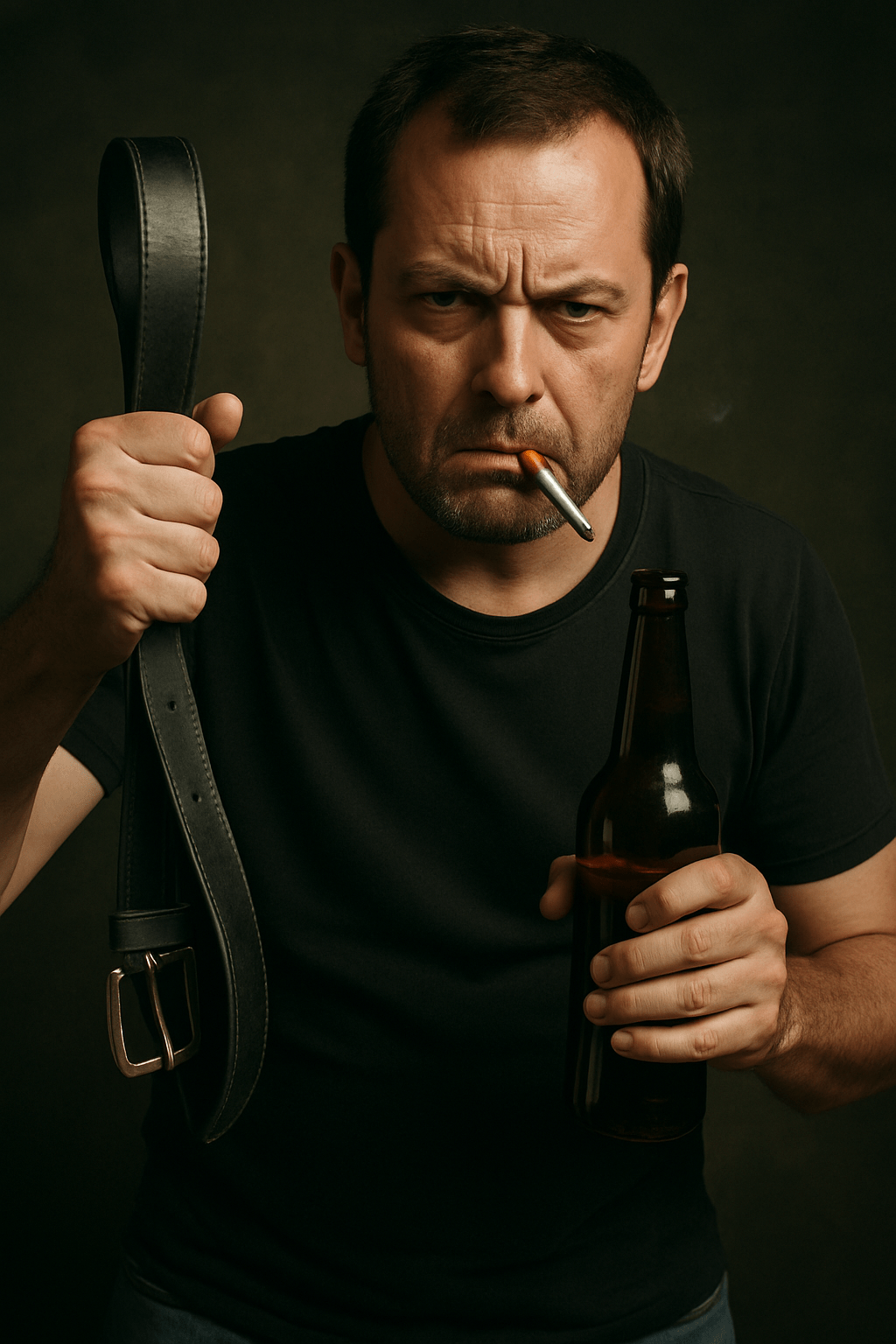
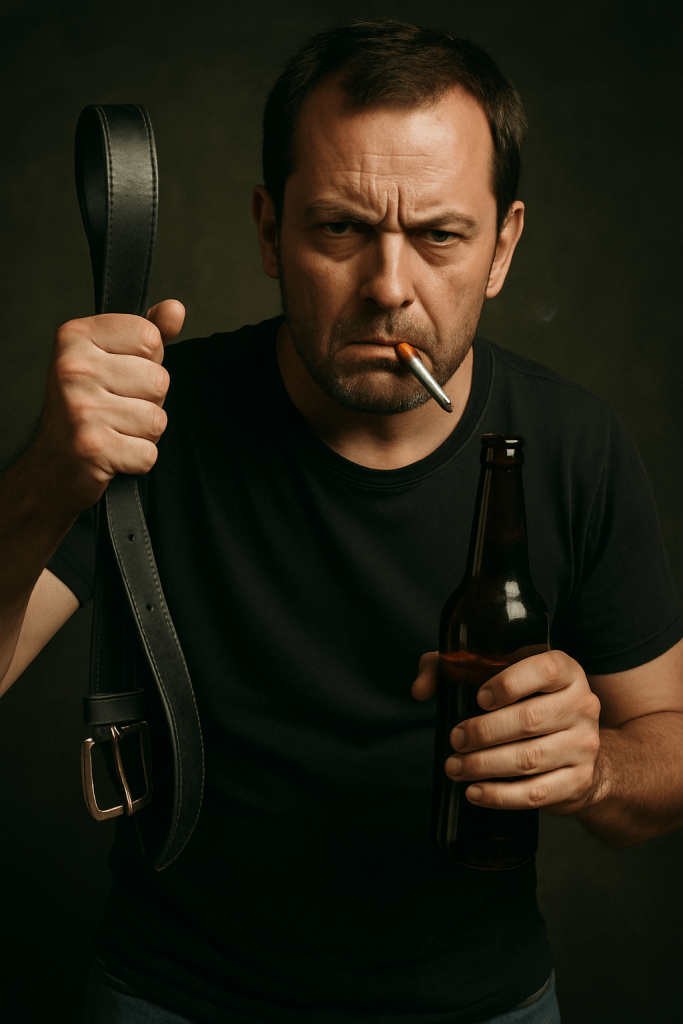
It was the sound of shouting, slamming doors, and the sickening crack of belts across skin.
It was the sight of her stepfather parading through the house in nothing but his underwear, his erect penis exposed, as if daring her to flinch.
At night, she would pull a long brown nightie over her small frame and pray it would make her invisible.
She clock-watched obsessively, counting down the minutes until he returned home — because by then, she had already learned that survival meant being ready.
But no matter how ready she tried to be, it was never enough.
H tried to tell people.
She spoke up. She cried out. She begged to be seen.
Nobody fucking listened.
Instead, she was passed around — a case file on a desk, a scared little girl with a social worker whose name she can’t even remember now.
Poor. Bullied. Laughed at for the way she walked — her limp a physical memory of beatings too old for her young body to carry.
The house smelled of cigarettes, stale alcohol, and despair.
The only constants were violence, chaos, and the thick, heavy feeling of knowing that help wasn’t coming.
Her body learned dissociation early — a child trapped inside herself — brain fogging over in protection as her stepfather pressed himself against her back on the living room sofa, her frozen body trapped under the weight of shame she couldn’t even name yet.
He gave her money sometimes — little bribes.
He followed her around the house like a hunter tracking prey.
And at school, when the teachers and Girl Guides leaders noticed the bandages on her arms, they asked questions H didn’t know how to answer.
Had she self-harmed? She doesn’t know.
The memories are stitched together like badly mended fabric — pieces missing, others too vivid to bear.
But the belt?
She remembers the belt.

The Years Nobody Saved Her
Violence was so normal in H’s world that it barely raised a ripple anymore.
Broken doors, smashed plates, the sting of belt buckles slashing across skin — it was the background noise of her childhood.
She learned to read the room the way other kids learned to read bedtime stories.
A glance at her stepfather’s clenched jaw, his belt hanging from his hand — that was enough.
She knew when to flinch. She knew when to hide.
But nowhere was safe.
When she wasn’t being beaten, she was being stalked inside her own home — followed from room to room, his presence thick and heavy behind her.
The sofa became a place of terror.
She can still feel the shame of lying there, frozen, as he pressed his erect penis against her small back, her body curling into itself, willing it not to be real.
She started dissociating so young she didn’t even have a word for it.
She’d drift somewhere else — anywhere else — while the horror happened.
At school, the bullying never stopped.
H walked with a limp, a leftover wound nobody asked about.
Her clothes were worn-out.
Her eyes were hollowed-out.
She carried trauma in every step, and the world looked away.
Even when she tried to speak — to friends, to teachers, to Girl Guides leaders — the system stayed silent.
A friend’s mother found out what was happening and told H’s mum.
Still, nothing changed.
Her home wasn’t a home. It was a battleground.
The family dog turned on her once — savage and bloody.
Another trip to hospital. Another scar.
Comfort eating became survival.
She would stuff food into her mouth, hoarding it like treasure, scared it would be taken away.
Sometimes she hid it in her cheeks.
Other times, she hid it in the walls.
Food wasn’t nourishment in H’s life — it was control, punishment, a weapon.
By the time she hit her teenage years, the violence escalated again.
Her brother, himself brutalised by years of violence, turned on her too.
The abuse came from every direction now — fists, words, groping hands, broken promises.
Pinned down. Taunted.
Bruised in ways no one ever saw.
Not just by strangers — by her own blood.
And still — still — nobody came.
Dragged Deeper: Grooming, Betrayal, and the Streets
At thirteen, H finally left her mother’s house — but not by choice.
She was shunted off to her aunt’s home, passed like a burden nobody wanted to carry anymore.
It was supposed to be a fresh start.
It was supposed to be safety.
It wasn’t.
There was a man who started staying at her aunt’s house.
At first, it was innocent — or so H thought.
Watching films together. Joking around.
But predators don’t announce themselves.
They move quietly.
They wait for their moment.
By fifteen, that man had groomed her — broken her boundaries so completely that when he initiated sexual contact, H didn’t even fight.
She dissociated instead — the one defence she’d learned that actually worked.
When her aunt found out, H wasn’t offered support.
She wasn’t protected.
She was kicked out.
Another home lost. Another adult choosing blame over protection.
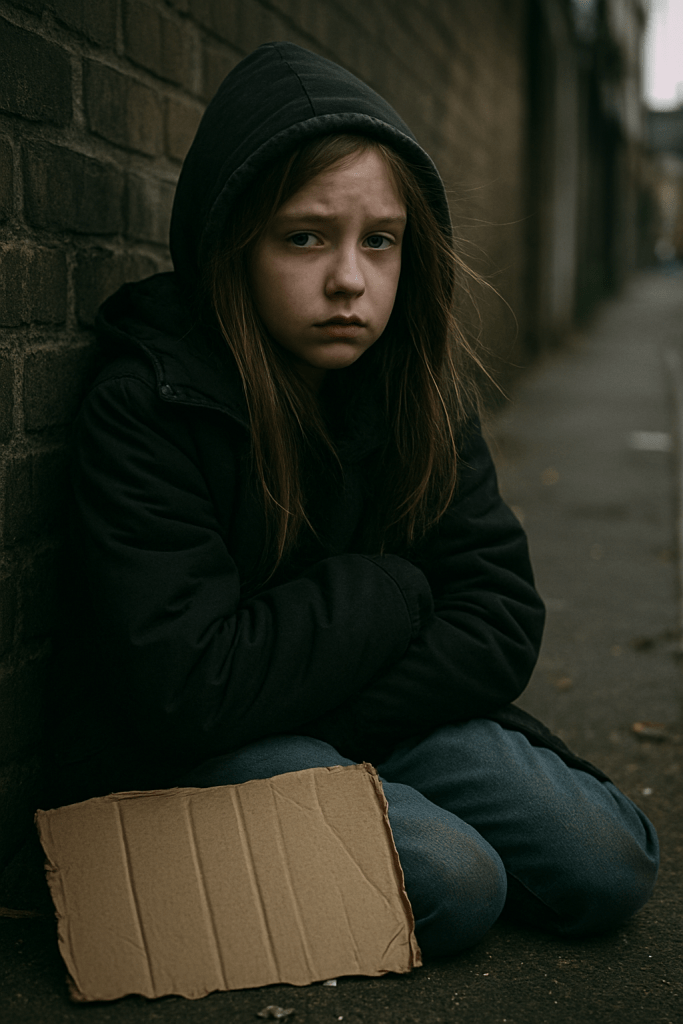
Homelessness became H’s reality.
Bouncing between hostels and the streets, sleeping under trees in the pouring rain.
She remembers clutching 25p so tightly in her pocket that it left an imprint on her skin.
One sweet a day — that’s how she survived.
No teenager should ever have to survive like that.
At sixteen, she returned to her mother’s house, skeletal from anorexia, her body buckling under starvation and trauma.
But safety still wasn’t waiting for her.
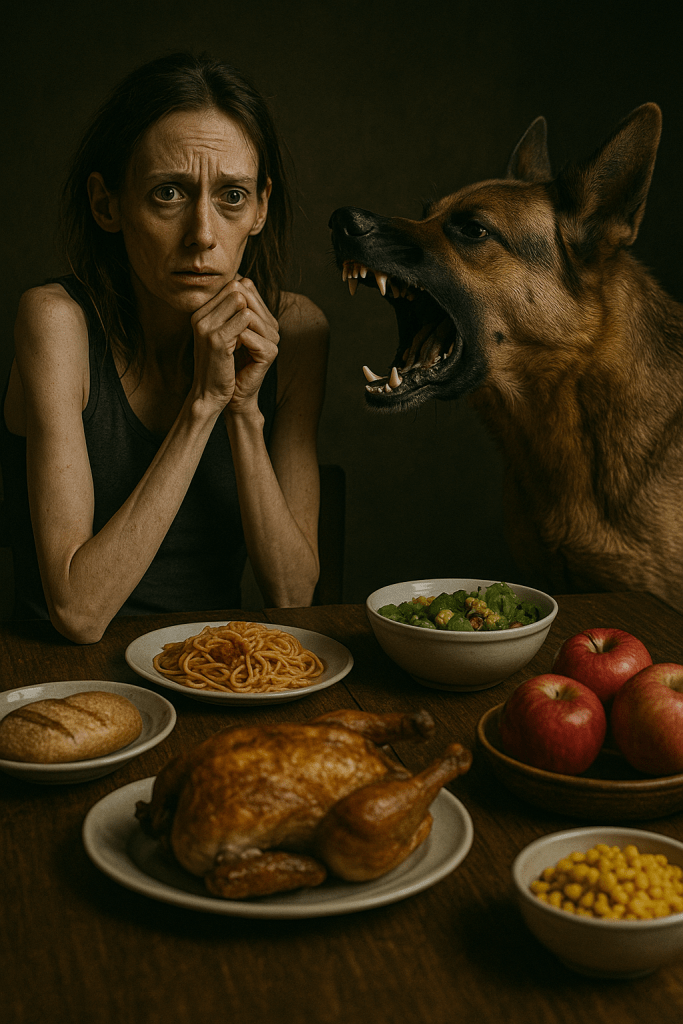
Her brother, now older and meaner, used his dog as a weapon — setting it on H to terrify her into submission.
Mealtimes became torture sessions, not nourishment.
She wasn’t allowed to leave the table until she’d eaten, her mother and siblings trapping her, taunting her, policing every bite.
And when she couldn’t force the food down, H learned new ways to rebel — hiding food in her mouth, vomiting secretly, scraping meals into the walls if she had to.
She lived in terror of eating.
She lived in terror of not eating.
By now, the drugs were creeping in — numbing the hunger, the pain, the endless ache of being unprotected.
And then Uncle P reappeared.
The man she had been sent to when she was “naughty,” as a child.
The man who had surrounded her with paedophiles.
The man who had abused her too.
Now, he was back — and the cycle of abuse circled like a vulture.
At eighteen, H managed to claw some kind of freedom — her own flat.
Only to realise in horror it was above Uncle P’s flat.
The nightmare was never finished.
It simply changed rooms.
Adulthood Came — But Safety Never Did
H was barely more than a child when she tried to build her own life.
She moved into a tiny flat above her abuser.
It wasn’t independence — it was survival, in whatever scraps she could find.
By eighteen, she was back under her mother’s roof again — not because she wanted to be, but because there was nowhere else to go.
The same roof where trauma still lived in every wall, in every breath, in the space between her and her brother, her sister, her mother.
The same brother who had once pinned her down now terrorised his own wife, carrying on the violence like an inheritance.
H clung to anything that resembled hope.
She fell into relationships, had children, tried to rebuild.
But trauma leaves fingerprints on everything.
One of her children’s fathers — a man H barely knew, a one-night stand — turned out to be abusive too.
The same horrors H had lived through as a girl were now threatening to touch her children.
And when her daughter — brave, terrified — came forward at sixteen to disclose abuse?
H did what no adult ever had for her.
She believed her daughter.
She fought for her.
She went to social services and told them everything.
And what did the system do?
No Further Action.
The same indifference that had abandoned H now abandoned her daughter.
The weight of it all — the generational trauma, the failures, the betrayals — collapsed onto H’s shoulders.
Misdiagnosed by mental health teams who didn’t look past their checklists.
Discriminated against because of her autism, treated like a problem to be contained instead of a mother fighting for her child.
Social workers, judges, so-called professionals — they didn’t see her.
Not the scared child.
Not the broken teenager.
Not the woman standing there now, begging them to look deeper.
And they stole her children from her.
Ripped them away and called it protection.
As if the system wasn’t the one who had failed to protect in the first place.
H became another statistic, another “troubled mother” file in a cabinet somewhere.
But she is not a file.
She is not a statistic.
She is a survivor who was brutalised by her family, by predators, and by a system that promised care and delivered cruelty.
And still — still — she fights.

Still Standing: The Fight H Should Never Have Had to Fight
Today, H is in her 40’s.
She carries fibromyalgia through her bones — a chronic, relentless pain born from a lifetime of trauma her body never had the chance to heal.
She fights through brain fog, memory gaps, anxiety that gnaws at her even on the good days.
But she’s still here.
Still fighting.
The nightmares never fully left.
The smell of cigarette smoke, the sight of a messy room, the clink of loose change in a jar — all of it can drag her back in a second.
Back to brown nighties.
Back to sofa cushions and belts.
Back to a childhood stolen and a womanhood betrayed.
Her mind flashes with memories sometimes — sitting at a piano with her grandfather, the only adult who made her feel safe, even if just for a moment.
His warmth is one of the only lights she holds onto from her earliest years.
Everything else is stained by violence, shame, and survival.
H was misdiagnosed over and over by mental health services who saw the symptoms but refused to see the cause.
And when her autism diagnosis came — something that should have offered understanding, protection, and rights — it was used instead as a weapon against her.
Twisted in courtrooms and reports to paint her as “unfit.”
Not a survivor.
Not a mother doing her best against impossible odds.
But a problem to be managed.
A case to be closed.
They stole her children.
The same system that failed to protect her at five, ten, fifteen, twenty — failed her all over again as a mother.
And still — H does not give up.
She is fighting for her children.
Fighting for her voice.
Fighting for the child she was — the child who screamed for help into the void and was met with silence.
H is not just a survivor.
She is a testament to everything that is wrong with the systems built to protect the vulnerable — and everything that is right with the human spirit that refuses to be destroyed.
Her story demands more than sympathy.
It demands change.
The system doesn’t just need fixing — it needs tearing down and rebuilding with survivors at the heart.
It needs to start listening, really listening, to the H’s of this world — not when it’s too late, but when it still matters.
Because no child should have to grow up like this.
And no woman should have to spend her life picking up the pieces the system was supposed to protect in the first place.
H deserved better.
Her children deserved better.
And we have a responsibility — all of us — to make sure her fight wasn’t in vain.


 The Grooming Files
Leave a comment