

©️ By Sophie Lewis | The Indie Leaks | The Grooming Files | @realtalkrealtea
“I’d Rather Die Than Be Attacked Again”
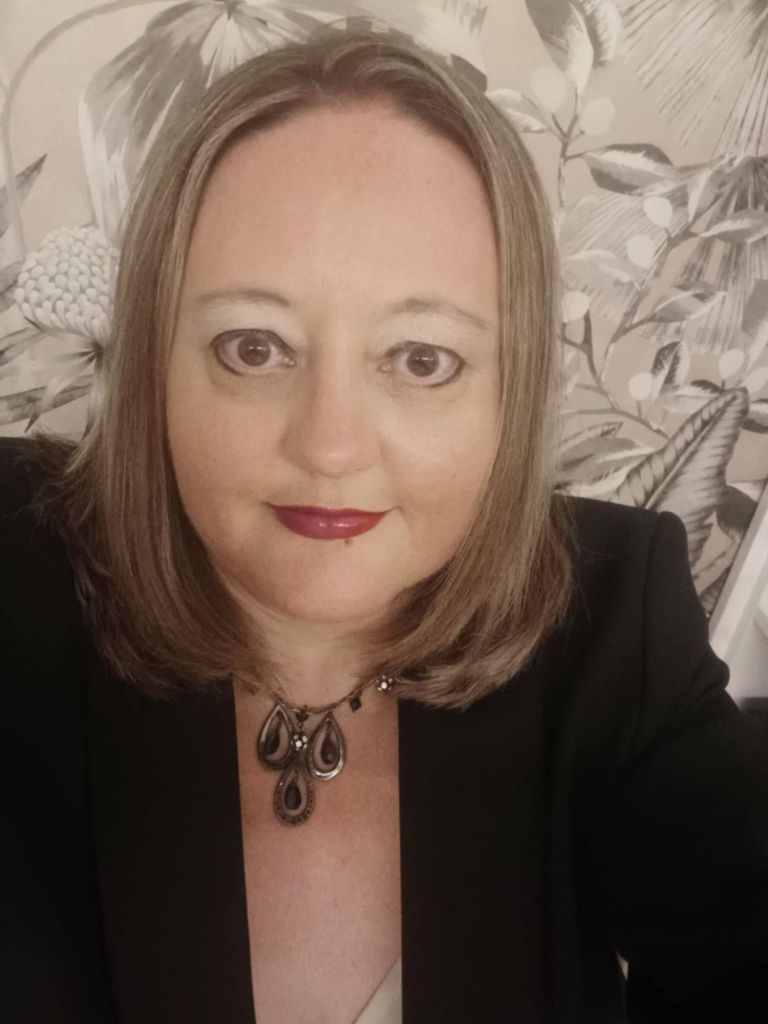
“I’d rather die than be attacked a third time.”
That’s not an exaggeration. It’s the raw truth of a woman who reported her childhood abuse to South Wales Police — and was left traumatised not just by her abuser, but by the very system meant to protect her.
What started as a brave step forward — disclosing years of child sexual abuse and helping bring a known, violent man to court — quickly spiralled into something unimaginable. Over the next few years, she would endure a deeply flawed police investigation, multiple failed trials, and a complete absence of victim safeguarding. But worse still, she would find herself on the receiving end of police violence, arrest, humiliation, and silencing.
Despite securing a civil settlement and public apology from South Wales Police after one unlawful arrest, it happened again. Officers from the same station returned. The fear, the trauma, and the physical assault were repeated — this time while she begged an ambulance service to help her.
Now, she’s battling not only the trauma of her past but also a court case she believes is designed to shut her up. Her mental and physical health have deteriorated. She’s terrified — and she’s running out of strength.
This is her story.
The Report and the Trial That Was Never Meant to Succeed
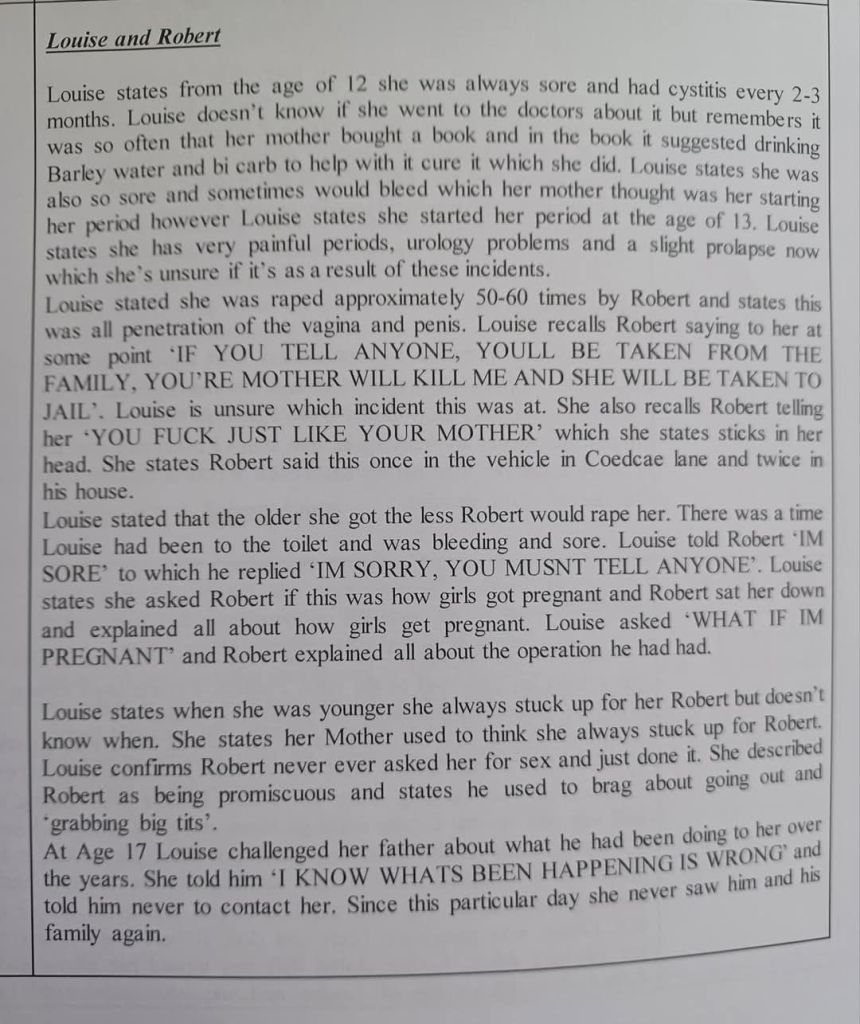
The woman’s ordeal with South Wales Police began when she reported historical child sexual abuse. The alleged perpetrator, Robert Witchell, was eventually charged with nine counts of rape of a child — a significant and serious case. But even as charges were brought, it was already clear the investigation had deep flaws.
South Wales Police never arrested Witchell. They failed to seize his electronic devices or gather critical evidence. There were missed opportunities throughout the investigation — moments that could have strengthened the case, protected the survivor, and potentially saved others. But those moments were lost.
Meanwhile, they did seize her devices — a move she found both confusing and traumatising, especially given the lack of similar action against the man accused of harming her.
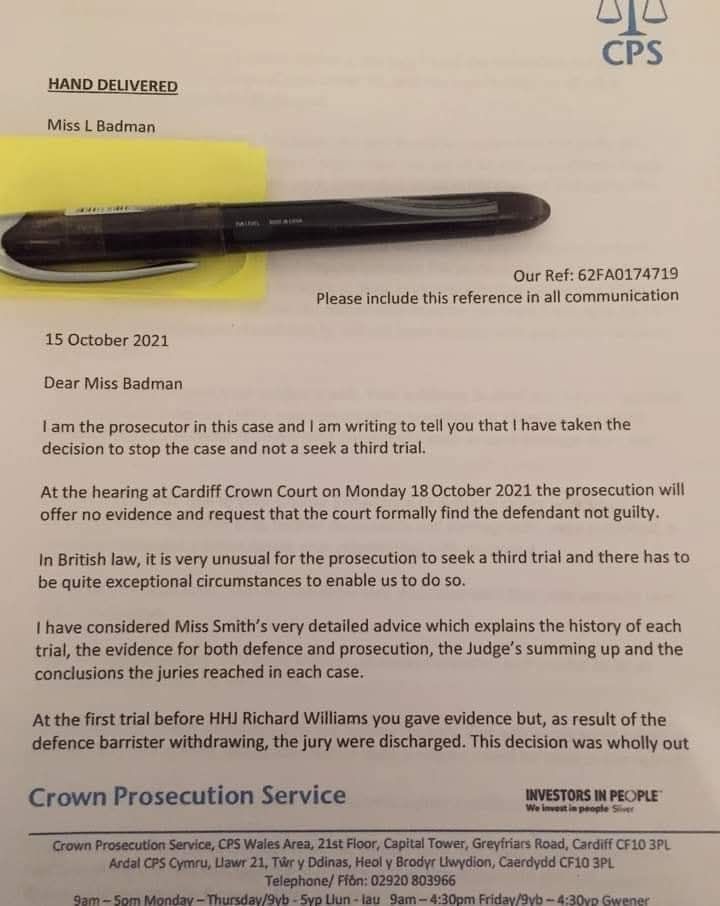
Three trials were brought forward. The first ended early when the jury was discharged. The second and third both resulted in partial acquittals and hung juries. After that, the CPS chose not to proceed. Her Independent Sexual Violence Advocate (ISVA), who had supported survivors through many trials, described the entire legal process as “the most shambolic” she’d ever witnessed.
Despite the gravity of the charges, there were no safeguarding orders put in place for her protection. No Sexual Risk Order. No structured monitoring. No risk management. She was left exposed — and the man she had accused, free.
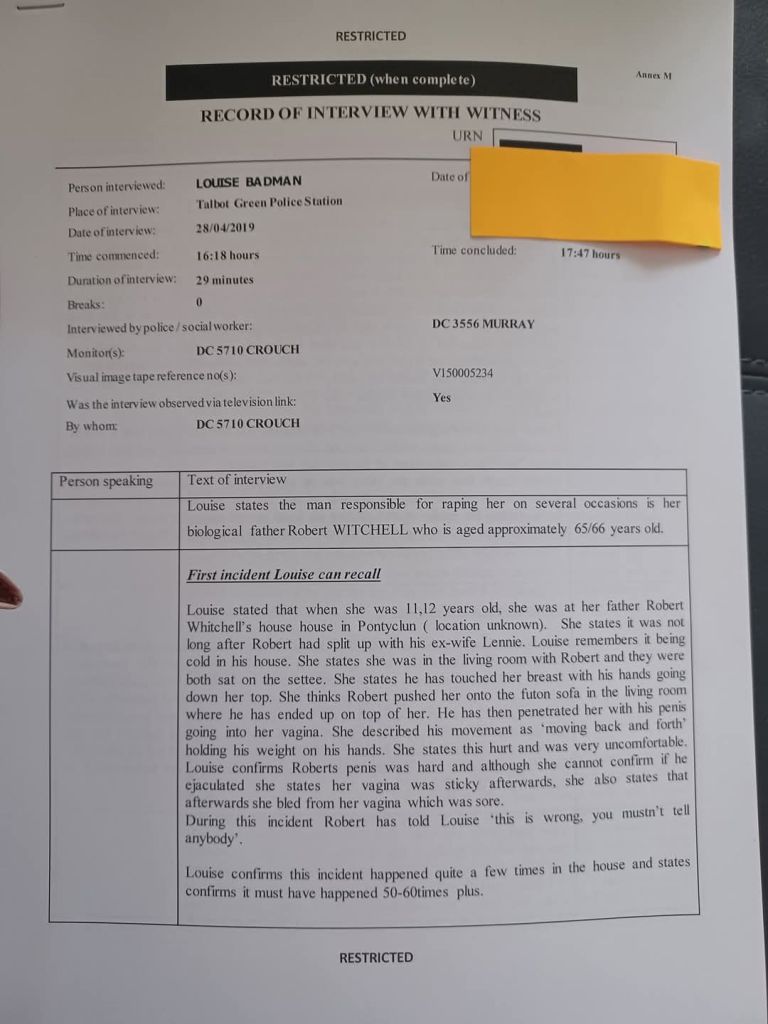
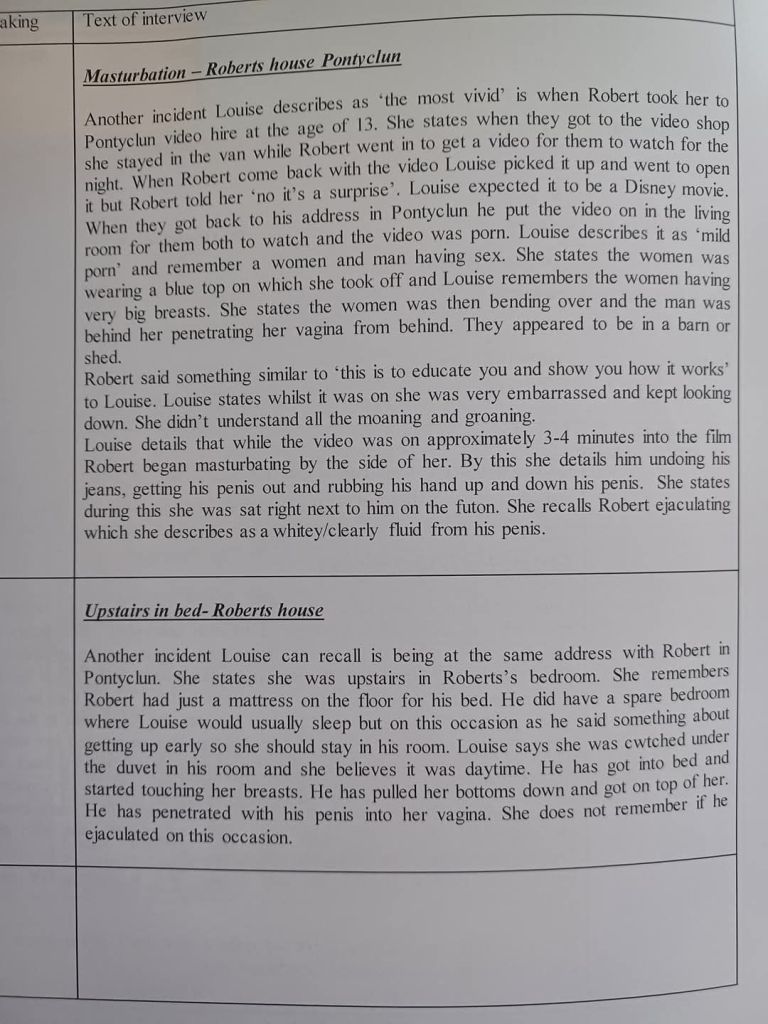
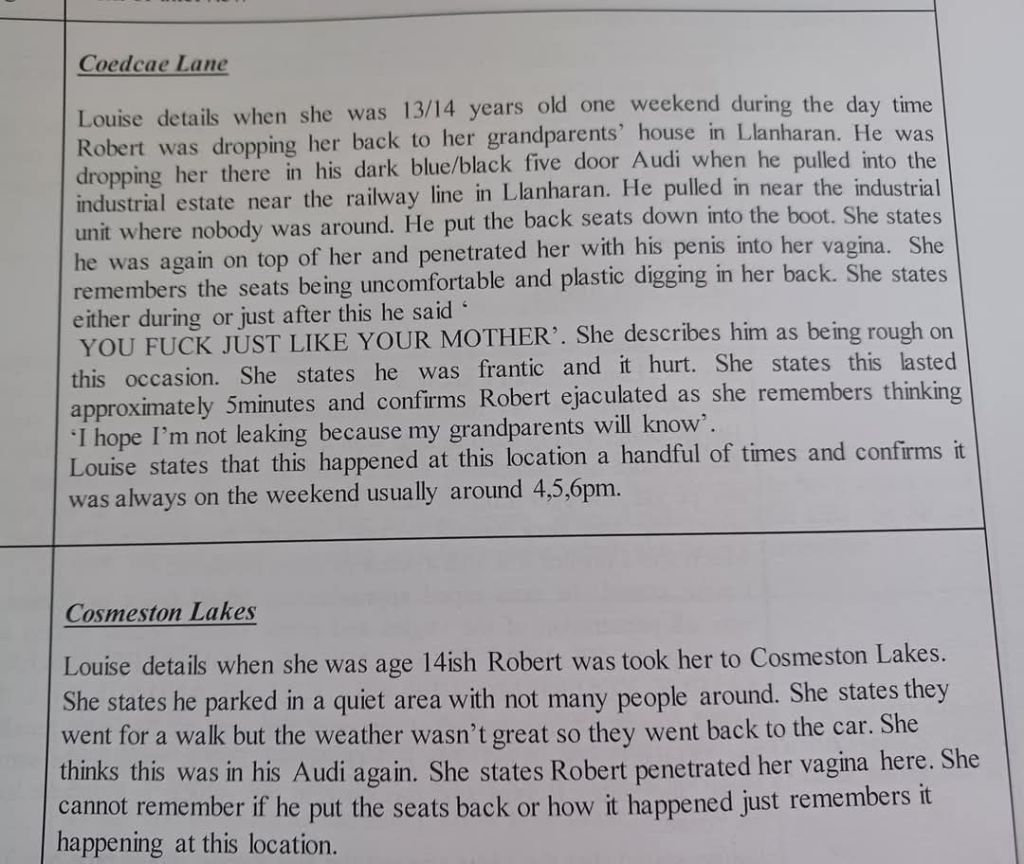
The First Arrest – 2:30AM, No Warning, No Dignity
While the man she accused was never arrested, she was.
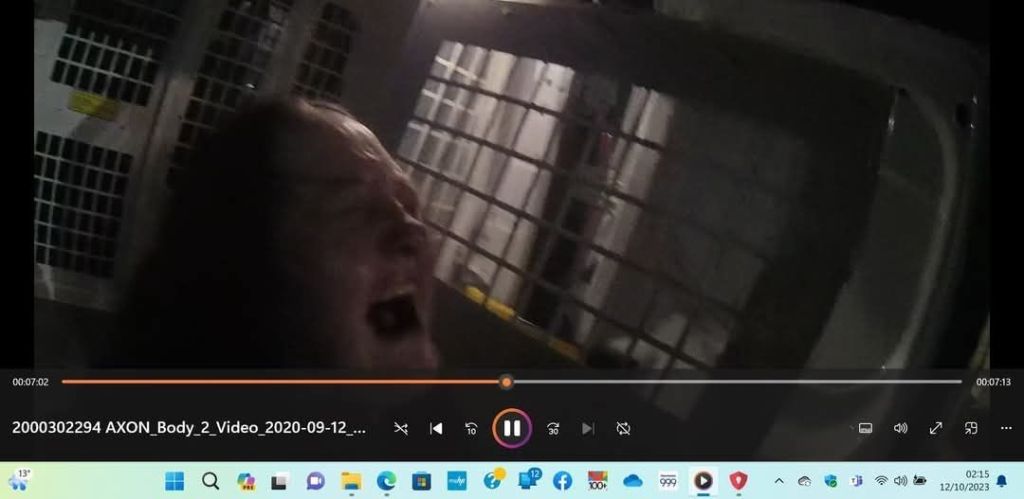
In the early hours of the morning, around 2:30AM, three police officers from Maesteg Station — PC Lauren Evans, PC Ben Griffiths, and PC Simon Smith — turned up at her home. She was not considered a threat, had no violent record, and the alleged offence was a minor, summary-only matter. Yet what followed was a full-force response that left her traumatised.
She describes being dragged from her home and exposed in front of male officers, her body left uncovered during the arrest. She remembers the fear, the shock, and the deep humiliation — emotions that haven’t faded since.
The charge she faced at the time was eventually dropped. She was never found guilty of any wrongdoing. But the experience left a mark that no apology could erase.
At a time when police had failed to arrest an accused child rapist, they used force against a vulnerable woman with no history of violence. And while no action was taken to secure his devices, hers were seized. To her, it felt like a message: you are the one under scrutiny.
The impact was devastating. She later admitted she didn’t want to be alive anymore. Still, somehow, she got through the trials. She waited for justice. But after the final case collapsed, she was told no further trial would be pursued.
No Safeguards. No Communication. No Protection.
After the second trial ended without a verdict, that was it.
There was no retrial. No justice. And no safeguarding — not for her, and not for the public.
Despite the severity of the charges against Robert Witchell, no Sexual Risk Order was put in place. No risk assessment was shared. No warning was issued to communities. The man she had accused — with a history of convictions, including for violence against partners — was allowed to return to daily life with no restrictions at all.
Meanwhile, she was left alone. Terrified. Traumatised. And increasingly convinced that the system had abandoned her.
So she did what the police wouldn’t: she warned people. She posted Witchell’s name and location on local Facebook groups to alert others and keep children safe. Her intention wasn’t revenge — it was survival. She didn’t want anyone else to suffer what she had.
But South Wales Police didn’t see it that way.
They invited her to a voluntary interview (VA). When she declined — out of fear, distrust, and mental exhaustion — she was threatened with arrest for harassment. For trying to protect others when the system failed to.
At the same time, she was pursuing legal action against the police for the first arrest. She eventually won. She received a £40,000 civil settlement and an official apology. On paper, it looked like progress.
But in her words:
“The apology meant nothing. Because they came back again.”
The Second Assault – “They Were From the Same Station”
The apology was barely dry when it happened again.
On 21st January 2024, she says four officers arrived at her home. And just like the first time, they were all from Maesteg Station — the very same station as the officers who assaulted her before.
Their names:
PC Ruth Abbott, PS Rob Fisher, PC Wiston, and PC Rayner.
By now, after everything she’d endured — from the botched investigation to the night-time arrest and the constant sense of being watched — she was traumatised, exhausted, and terrified of South Wales Police. So when they appeared at her door again, she panicked.
She told them to go away. She screamed. She shouted. She begged.
Instead of leaving, they began tampering with her door lock, attempting to force entry.
Her heart pounding, she did what anyone in fear would do — she called for help. She phoned the ambulance service, desperate for medical support as chest pain took hold. But by the time she was on the line, the officers had already forced their way in.
She says what followed was another violent takedown — a second assault in her own home. As she begged the ambulance operator for help, she was overwhelmed and physically restrained. In a final twist of cruelty, she says police instructed the ambulance crew to stand down.
There’s a recording of part of that call. It exists.
It captures her fear, her desperation, and her voice, cracking under the weight of it all.
She wasn’t a threat. She was a disabled, traumatised woman — being targeted, again.
A Charge, a Warrant, and a Broken System
After the second arrest, the outcome was bleak but unsurprising.
No Further Action (NFA) was taken on the original reason she was arrested — a quiet admission that there was no case to answer. But in a move she believes was designed to intimidate and silence her, she was charged with common assault on an emergency worker.
She insists she is innocent.
“I’ve never hit anyone in my life,” she says. “I was terrified. I was begging for help.”
She doesn’t deny being emotional. She doesn’t deny shouting. But she does deny violence — and has no history of it whatsoever.
Still, the process dragged on. Her health deteriorated. When the court date for her plea hearing came, she was too unwell to attend. So she did what she thought was right: she requested a CVP (remote video hearing), supported by medical documents.
The evidence she submitted wasn’t vague. It included:
- A letter from her GP
- Two ISVA support letters from New Pathways
- A previous letter from her surgery
- A 26-page psychological report from Professor Jenny Shaw, one of the UK’s leading forensic psychiatrists
But the Magistrates’ Court refused the request.
They issued a warrant for her arrest.
“How is that fair?” she asks. “They have all this proof that I’m ill, disabled, and traumatised by the police. And they still want to drag me in like I’m dangerous.”
Her solicitor — who she says has offered little support — had promised to pursue an abuse of process hearing and request that the case be moved out of Wales entirely. But those steps were never taken. She’s now left fighting a system she believes is more focused on protecting itself than seeking justice.
And it’s not just a fear of being found guilty. It’s a fear of what could happen if she ends up behind bars.
“It is no exaggeration to say that if they send me to prison, I won’t survive,” she says. “I’d rather end my life than be assaulted by them again.”
Nowhere Safe – The Harassment Continues
She isn’t safe — not in her own home, and not in her own mind.
The police say the matter is in hand. That the process is fair. That there’s nothing to worry about.
But she’s not convinced.
Just days ago, three officers appeared at her front door again. She wasn’t home. She was staying with a friend, trying to recover, trying to breathe. When she reviewed her camera footage and saw them standing there, her heart sank. Not again. Not now. Not when she’s barely holding on.
“I’m not exaggerating,” she says. “I’m terrified. I don’t sleep properly. I check the windows. I panic when there’s a knock.”
She’s not just fighting a court case — she’s fighting a full psychological assault from the very institution that’s meant to uphold the law.
She says she’s been stalked by officers. Ignored when she’s tried to raise safeguarding concerns. And left to fear that her life could spiral — or end — with just one more knock on the door.
There are moments when she clings to hope. A few good friends. Some distant advocacy. But when the people supposed to protect you are the ones who hurt you, where do you go?
The Last Line – Her Words, Her Warning
She never wanted to be a voice for anyone.
She just wanted to survive.
But after being failed by the justice system, assaulted in her own home — twice — and left to face the consequences while her abuser walks free, she’s found herself in a place no survivor should have to be: the one sounding the alarm.
She knows some will question her. Some will try to silence her. But her message is clear:
“This isn’t justice. This is retaliation.”
Her calls for accountability have been ignored. Her medical needs dismissed. Her fear, minimised. All while officers who assaulted her remain unpunished — and the man she reported for raping a child lives freely, with no restrictions, and no risk order.
The apology from South Wales Police means nothing now.
Not when the harm continues.
Not when she fears prison.
Not when she checks the door every time she hears a noise — heart racing, wondering if it’s them again.
She doesn’t want sympathy.
She wants people to understand what’s happening. To see how the system bends, protects itself, and leaves survivors in the dirt.
“I’m not safe,” she says. “And if this system can do this to me — after all I’ve already survived — it can do it to anyone.”
This isn’t just her story.
It’s a warning.
Support Survivors:
Louise has now launched a public page to continue sharing her story and support other survivors. You can follow or contact her here: Facebook – Louise’s Page
Receipts & Evidence: Supporting Material
This article is grounded in documented fact, survivor testimony, and verified media reports. Below is a selection of public-facing materials and sources referenced throughout:
1. Louise Badman’s Previous Media Coverage
Mirror UK article confirming charges and trial history
- “I was raped at 12 but 36 years later a jury left me devastated with their verdict”
- Published: 12 Dec 2021
- Confirms: Charges (9 counts), 2 trials, CPS dropped third
- Read article on Mirror.co.uk
—
2. WalesOnline Coverage
- Reposted by the Mirror but originally from WalesOnline
- Confirmed Robert Witchell was charged, tried, and not convicted
- Reinforces the same timeline
- Archived version via WalesOnline
—
3. Louise Badman’s Public Facebook Page
- Where she shares her story, supports survivors, and speaks openly about her case
- Visit Louise’s Page
—
4. Civil Case Result
- Louise received £40,000 in compensation and a formal apology from South Wales Police following the first unlawful arrest
- Discussed publicly by Louise via her social platforms and radio clips
- BBC Radio Clip: Compensation Story
—
5. 999 Call Recording (21st Jan 2024)
- Partial call recording with ambulance service during second police incident
- Louise pleads for help while police allegedly force entry
- Listen to Call Clip
—
6. Statement by Survivor (included in article)
- Louise’s direct quotes, consistent across public posts, messages, and interviews
- Additional documentation (e.g. GP letter, ISVA letters, psychological report) available if requested by verified press/legal bodies
All documentation cited in this section is either publicly available, previously published by media, or directly supplied by the survivor with permission.


 The Grooming Files
Leave a comment