
©️ By – Sophie Lewis
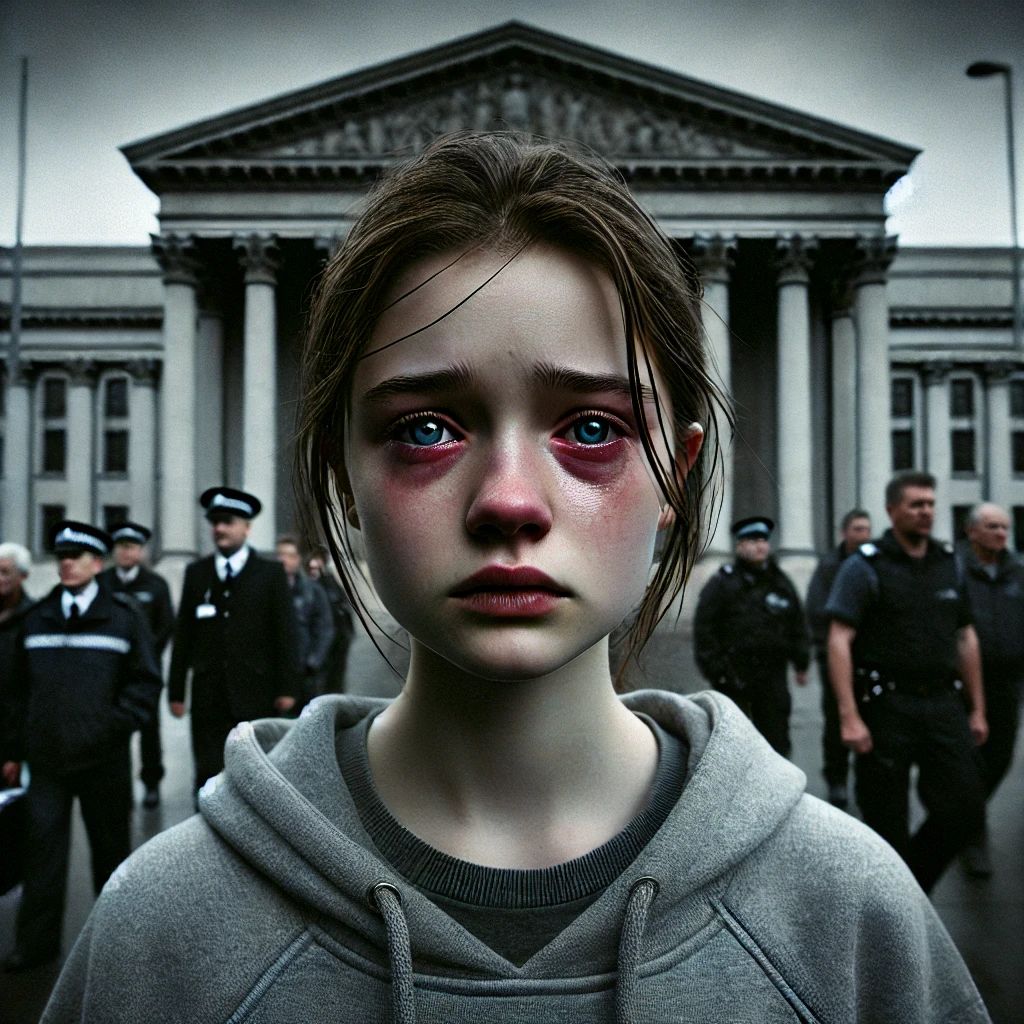
This Isn’t Ignorance. It’s a Blueprint.
They’ll tell you this is about failure.
That the system “missed the signs.”
That no one could’ve known what was really going on.
But they did.
They knew.
This isn’t failure. This is function.
This is how it was built.
We were surrounded by predators—and the people meant to protect us were trained to protect them.
Why?
Because predators wear uniforms.
They sign paychecks. They run schools. They coach teams. They sit in Parliament.
And if you believe victims, you have to look at who those predators really are.
So instead, they turn the other way.
They bury reports.
They discredit victims.
They paint predators as respectable—and us as unreliable.
They didn’t just ignore us.
They manufactured doubt around us.
They created a system where:
- Reputation outweighs evidence
- Silence is rewarded
- Whistleblowers are punished
- Victims are disbelieved by default
This isn’t about a few missed cases.
This is about a system designed to maintain power, no matter how many girls it destroys.
They Watched Us Fall — And Chose Not to Catch Us
We weren’t invisible.
We were everywhere—on their registers, in their care, under their supervision.
We were the girls they labelled before they listened.
Some of us were neurodivergent.
Some were traumatised.
Some were just loud, messy, unpredictable.
Many of us came from council estates, broken homes, or places the world already gave up on.
We didn’t fit their version of what a “real” victim looks like.
So when the signs started showing—
When we started disappearing into ourselves, into strange men’s cars, into chaos—
They didn’t step in.
They stepped back.
We were “too grown.”
“Too difficult.”
“Too sexual.”
They blamed us for what was happening to us.
They knew.
They knew when the shopkeeper touched one of us and we gave full statements—and nothing happened.
They knew when teachers dismissed reports of the bus driver.
They knew when we told adults about the man who watched us from the trees—only for him to assault a girl years later.
They knew, and still they let us fall.
And when we didn’t act like victims?
When we were angry?
When we were numb?
When we tried to laugh through the fear, flirt through the shame, survive through the silence?
They called us liars.
Drama queens.
“Too much.”
“Attention-seekers.”
They were never protecting us.
They were protecting themselves.
Because if they admitted we were right, they’d have to admit they failed us.
If they looked closely, they’d have to see just how many of us there were.
So they looked away.
And we were left to carry the weight.
We didn’t fall through the cracks.
We were pushed into them.
The Institutional Web: Where Every Door Closes
We weren’t failed by one person.
We weren’t failed once.
We were failed in layers—by every system we were told to trust.
Each one had its own way of closing the door on us.
Each one played its part in making sure we stayed silent.
Together?
They built a fortress that kept predators safe—and us trapped inside.
Schools
They saw us every day.
They saw us disappear into ourselves, spiral, act out, shrink down.
They heard the whispers.
They knew who was waiting at the gates.
But they didn’t want to “get involved.”
They didn’t want the responsibility.
So instead, they blamed our behaviour. Punished our reactions.
They never asked what was underneath.
Police
We gave them statements.
Video interviews. Names. Details.
We gave them everything—and they gave us nothing.
They didn’t investigate.
They didn’t follow up.
Sometimes they didn’t even think it was worth writing down.
We weren’t from nice areas.
We weren’t “well spoken.”
We weren’t the kind of victims they wanted to fight for.
And in some cases?
They were the predators. Or protecting them.
Social Services
They knew the names.
They had the files.
They were supposed to step in.
But instead, they focused on “managing risk.”
Translation?
Blame the family. Move the child. File the paperwork. Close the case.
How many times did they have the chance to intervene—and didn’t?
How many girls had their trauma documented and ignored?
Too many.
Because to admit the truth would mean rethinking everything.
And they didn’t want to.
The Crown Prosecution Service (CPS)
Even in the rare times someone fought to bring a case forward—
the CPS were there to shut it down.
Not “enough evidence.”
“She’ll be torn apart in court.”
“It’s not in the public interest.”
They protected their conviction rates.
They protected their reputations.
They never protected us.
How many predators walked free because our stories weren’t “clean” enough?
Because we didn’t look broken enough to believe?
They weren’t just rejecting our cases.
They were writing off our lives.
Every door that was supposed to open for us slammed shut.
Every institution that claimed to be here for children was built to protect itself first.
We were inconvenient. Complicated. Loud.
They made sure we stayed out of the way.
And the predators?
They learned how to move through it all without consequence.
Because they knew the systems better than we did.
And the systems were never built for us to begin with.
How They Stay Protected: The Silence, the Power, the Pattern
It’s not that they got lucky.
It’s not that no one knew.
It’s that they were protected—deliberately, consistently, and from the inside out.
We were the ones who had to explain ourselves.
They were the ones given the benefit of the doubt.
Over and over and over again.
The Reputation Shield
They had jobs.
They were known.
They were “nice guys.” “Helpful.” “Quiet.” “Well-liked.”
So when we pointed fingers?
We were instantly discredited.
“They wouldn’t do that.”
“He’s been here for years.”
“You girls exaggerate.”
Their public image became their defence.
And our personal pain became our burden to prove.
The Familiar Faces
Some of them were connected—to staff, to family, to institutions.
Sometimes they were family.
Sometimes they were friends of teachers, police, workers.
So when we raised the alarm,
it wasn’t just dismissed—it was buried.
Because exposing them would mean exposing the people who let them near us.
And nobody wants to unravel that chain.
So they clipped the thread at the source: us.
The Power of Silence
They knew what to say.
They knew how to twist it.
They knew when to lie, when to charm, when to threaten.
And the people around them knew how to stay silent.
Because silence doesn’t just protect the predator—it protects everyone connected to them.
Everyone who ignored it.
Everyone who would rather stay comfortable than confront what’s real.
The Smear Campaign Against Victims
If we spoke up, we were unstable.
If we showed emotion, we were unhinged.
If we tried to move on, we “couldn’t have been that traumatised.”
We were picked apart, character by character.
Our credibility destroyed before we ever had a chance.
Because if they couldn’t protect the predator directly,
they’d just destroy the witness instead.
This is the pattern.
And it repeats in every institution, every town, every story.
Predators thrive not just because of what they do—
but because of how many people are willing to let them do it.
The Damage They Refuse to Acknowledge
They think the worst thing that happens to us is what he did.
The abuse. The grooming. The moment.
But the real damage?
It’s what happens after.
After you speak and no one listens.
After you give a statement and nothing happens.
After you’re labelled, discredited, made to feel like you were the problem all along.
We carry it in ways they’ll never see:
- In the guilt. For surviving. For not saying more. For not doing more to stop it—even though it was never ours to carry.
- In the shame. That creeps in even when we know it wasn’t our fault.
- In the silence. The kind that makes you doubt your own memories because no one ever validated them.
- In the self-destruction. The pills. The running. The breakdowns. The numbing.
- In the relationships. Never feeling safe. Never knowing how to trust. Feeling like love will always cost you something.
- In the identities. Neurodivergent girls taught to mask, to minimise, to accept harm as part of life—because they were never protected like the others.
They don’t count this part.
They don’t document the aftermath.
They don’t follow up with the girls they ignored.
Because doing that would mean admitting it was never about “not knowing.”
It was about choosing not to care.
How many girls spiralled out because they were dismissed?
How many ended up addicted, missing, locked up, or buried because no one would take them seriously?
That’s what this costs.
That’s the real body count.
And they still pretend like it’s a mystery.
We were hurt by predators.
But we were broken by the people who looked away.
And no apology, no policy change, no half-hearted campaign will ever undo that.
This Is the Reckoning
We tried silence.
We tried giving them the benefit of the doubt.
We tried going through the “right channels.”
None of it worked.
So now we’re doing what they never expected—
we’re telling the truth. Out loud. Together.
And we’re not asking anymore.
We’re calling it what it is.
This wasn’t a mistake.
It wasn’t a “missed red flag.”
It wasn’t a tragic one-off or a community issue or something that happened “back then.”
It is now.
It is still happening.
And it is everywhere.
In homes. In schools. On buses. In staff rooms. In uniforms. Behind locked doors.
In systems that say “safeguarding” while protecting abusers behind closed curtains.
They don’t want this out.
Because it doesn’t just expose predators.
It exposes the people who protected them.
The schools who knew.
The police who dismissed.
The CPS who buried cases.
The adults who said “not my problem.”
We are their problem now.
We are no longer girls trying to be heard.
We are women who remember everything.
We are watching. We are writing. We are connecting.
And we are coming for the silence that has kept them safe.
If You Were One of Us — Speak.
Because you weren’t the only one.
Because your voice matters.
Because your story deserves daylight.
I’m collecting stories from adults (18+ only) who were groomed during the early internet era—online or offline.
Anonymous. Safe. Powerful.
[Share Your Experience! – Anonymous Form]
This is the part they didn’t see coming.
Not the trauma—but the survival.
Not the silence—but the spotlight.
You want to know why they keep getting away with it?
Because no one was supposed to talk.
Because no one was supposed to connect the dots.
Because no one was supposed to remember.
But we remember.
And now?
We speak.
We expose.
We burn.
This is the end of pretending.
This is the beginning of the reckoning.

 The Grooming Files
Leave a comment